

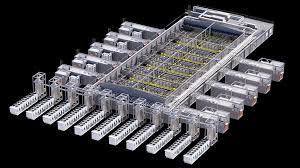
Vertiv, a global leader in critical digital infrastructure, has announced significant progress on its production-grade digital twin capability for SmartRun, integrated into the NVIDIA Omniverse DSX Blueprint. The innovation marks a major step in Vertiv’s roadmap to make AI factory infrastructure more configurable, repeatable, and simulation-ready. As AI deployments scale to higher densities, the company said traditional document-based processes can no longer keep pace, making model-based planning essential for faster and more reliable infrastructure design.
The SmartRun digital twin enables infrastructure to be designed, simulated, and validated as a single system before build-out. By capturing configurations and dependencies in a virtual environment, it reduces late-stage design changes, lowers integration risks, and accelerates operational readiness. “AI infrastructure can no longer be planned one compute generation at a time,” said Scott Armul, Vertiv’s Chief Product and Technology Officer. He explained that SmartRun encodes Vertiv’s expertise into simulation-ready building blocks, supporting faster and more confident AI factory planning.
The initiative represents the first phase of Vertiv’s multi-stage AI factory digital twin roadmap. According to NVIDIA’s Vice President of AI Infrastructure, Vladimir Troy, integrating SmartRun into Omniverse DSX workflows will allow customers to evaluate infrastructure choices earlier and prepare for multiple generations of accelerated computing. At Computex Taipei 2026, Vertiv will demonstrate SmartRun both as a physical infrastructure system and as a configurable digital twin, showcasing how model-based design can improve downstream planning and coordination.
Developed using Dassault Systèmes’ model-based engineering on the 3DEXPERIENCE platform, the demonstrator connects to NVIDIA Omniverse DSX workflows to establish a shared digital foundation for configuration, simulation, and optimisation. Stéphane Sireau, Dassault’s Vice President of High Tech Industry, noted that digital twins allow complex infrastructure systems to be represented with intelligence and engineering intent. The collaboration between Vertiv, NVIDIA, and Dassault signals a shift from document-based design toward industrialised, model-based systems engineering optimised for speed, quality, and system-level performance.