

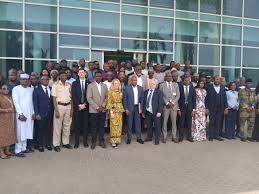
Nigeria has reinforced its position as a leading cybersecurity force in Africa following the conclusion of the TAG Africa Cyber Programme Phase Two in Abuja, a partnership supported by the United Kingdom Government. The milestone comes at a critical juncture as the National Cybersecurity Coordination Centre intensifies efforts to standardize the protection of the nation’s critical digital infrastructure and deepen institutional capacity.
The timing carries diplomatic weight. The successful completion of the programme precedes the planned State Visit of President Bola Tinubu to the United Kingdom, where renewal of the UK Nigeria Cyber Memorandum of Understanding is expected to feature prominently. The programme, delivered by TAG International, signals a shift in Nigeria’s cybersecurity posture from reactive incident management to structured auditing and regulatory consolidation.
At the heart of the reforms is the National Cybersecurity Coordination Centre, which is working to entrench global standards within Nigeria’s digital defense architecture. Four of its professionals have become among the first in Africa to earn SIM3 certification, a globally recognized maturity model for incident response teams. Additional officers completed the Certified Threat Intelligence Manager course, strengthening Nigeria’s intelligence gathering and analytical capabilities.
The partnership also produced a comprehensive review of Nigeria’s National Incident Response Plan and advanced the groundwork for a National Digital Forensics Policy. According to Salawu Sheriff, Technical Assistant to the National Coordinator at the NCCC, the milestones enhance not only Nigeria’s cyber readiness but also contribute to the stability of the broader regional and global digital ecosystem.
For the United Kingdom, the collaboration reflects a strategic dimension of technology diplomacy. Mrs. Gill Lever OBE, British Deputy High Commissioner, described the engagement as evidence of strong alignment between both countries, underscoring the UK’s view of Nigeria as a central digital security partner in West Africa. As discussions shift toward London ahead of the MoU renewal, observers expect deeper commitments on intelligence sharing, joint cybercrime operations, and technology transfer, positioning Nigeria to demand stronger investment and technical cooperation in its expanding digital economy.