


Artificial Intelligence (AI) has become the centerpiece of Nigeria’s burgeoning tech ecosystem, with startups leveraging its capabilities to transform industries such as fin-tech, agritech, and healthcare among other critical and less critical sectors. Leading companies like Flutterwave and Farmcrowdy and the fast rising Alluvium have gained global acclaim by integrating AI to drive innovation. As AI continues to dominate trends of tech discussions, the transformative potential of quantum computing remains largely unexplored in Nigeria and much of Africa.
Africa’s tech scene is on an upward trajectory, with AI driving remarkable strides in optimizing supply chains, improving healthcare delivery, and expanding financial inclusion. However, experts assert that quantum computing could eventually redefine the boundaries of innovation, offering solutions to computational challenges that AI alone cannot address. This presents a unique opportunity for Africa to leapfrog in technological advancements.
In the list of the top ten countries planning their paths to the podium in the global quantum race, no Africa country nears mentioning with United States, China, Germany, Canada, United Kingdom, France, Australia, Japan, Netherlands, South Korea running on the tracks.

Quantum computing operates on the principles of quantum mechanics, providing unparalleled computational power to tackle complex problems in fields such as cryptography, climate modeling, and drug discovery. Its capabilities could revolutionize Africa’s development trajectory, addressing infrastructural and logistical bottlenecks. However, the steep learning curve and lack of investment have kept this technology out of reach for many startups, tech savvies and investors in Nigeria and other African countries.
Despite their distinct capabilities, AI and quantum computing are highly complementary. Quantum computing could enhance AI by offering vast computational resources, enabling more sophisticated algorithms and accurate data analysis. This intersection, known as quantum-enhanced AI, has the potential to solve challenges ranging from precise climate modeling to tailored healthcare solutions.
One particular organization that is leading the charge for quantum computing in Africa is Quantum Leap Africa (QLA), created by the African Institute for Mathematical Sciences (AIMS) to catalyze top quality high impact research in data science, smart systems engineering and drive the future IT revolution through quantum information. It is also mandated to train the next generation of innovators in information science and technology.
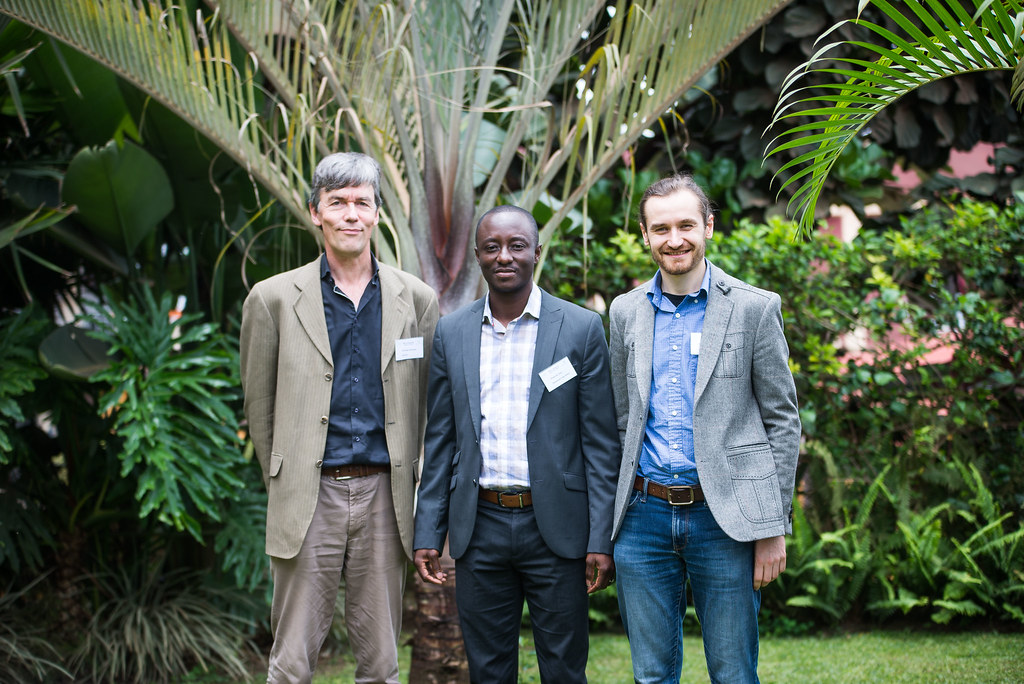
Based in Rwanda, QLA under the leadership of the Lead Scientist & Director, Dr Prince Osei and the Project co-ordinator Molly Mutesi has been dedicated to building a quantum-ready continent through research, training, and advocacy. For Nigerian startups and tech enthusiasts, this presents a golden opportunity to gain early access to the next frontier of technological innovation.
QLA’s initiatives include mentorship and education programs that equip young Africans with the skills needed to harness quantum technologies. These efforts are a clarion call for Nigerian tech hubs, such as Lagos’s “Silicon Lagoon” and similar centers in Abuja and Port Harcourt, to incorporate quantum computing into their narratives. Collaborations with QLA could help bridge the knowledge gap and spark local interest in this transformative field.
Globally, tech giants like IBM, Google, and Microsoft are investing heavily in quantum computing, recognizing its game-changing potential. In contrast, Nigeria’s tech ecosystem remains focused on immediate gains from AI and blockchain, leaving quantum computing largely overlooked. Cloud-based quantum platforms offered by these global firms provide an accessible entry point for experimentation and development.
Quantum computing could address critical challenges in sectors like energy, finance, and healthcare. For instance, quantum algorithms can optimize energy distribution, crucial for Nigeria’s underperforming energy sector. Similarly, its integration with AI could revolutionize precision medicine and enhance solutions to health issues specific to the African context.
The synergy between AI and quantum computing lies in their shared ability to analyze vast datasets and solve complex problems. While AI excels in pattern recognition, quantum computing provides unparalleled computational depth. Together, they could redefine problem-solving approaches to Africa’s unique challenges, from food security to climate adaptation.
As Africa’s leading tech hub, Nigeria must seize the quantum opportunity. By partnering with initiatives like Quantum Leap Africa and leveraging global quantum platforms, Nigerian startups can pioneer solutions to pressing challenges. This collaborative approach, backed by government policies and academic curricula updates, could position Nigeria as a leader in the quantum era while building on its AI achievements.