

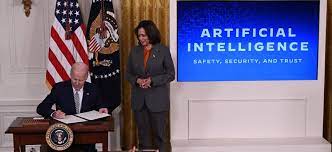
United States President Jo Biden’s administration took significant strides on Tuesday towards establishing crucial standards and guidance for the secure implementation of generative Artificial Intelligence (AI) and methods to test and protect the system.
The National Institute of Standards and Technology (NIST) under the Commerce Department called for public input by February 2, aiming to define essential testing procedures vital for ensuring the safety of AI systems.
Commerce Secretary, Gina Raimondo highlighted that this initiative was spurred by President Biden’s executive order in October, focusing on AI. Its objective is to cultivate “industry standards concerning AI safety, security, and trust, allowing the United States to maintain its leadership in responsibly developing and using this swiftly evolving technology.”
NIST is in the process of formulating guidelines for AI evaluation, fostering standard development, and establishing testing environments for AI systems. Soliciting feedback from both AI firms and the public, the request specifically targets managing risks associated with generative AI and reducing the dissemination of AI-generated misinformation.
Generative AI, capable of producing text, images, and videos based on open-ended prompts, has generated both excitement and concerns. Worries include potential job displacement, electoral disruptions, and its capacity to surpass human control with potentially catastrophic consequences.
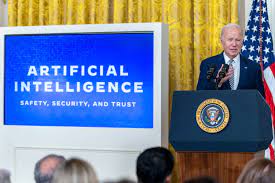
Biden’s directive mandates agencies to set testing standards, encompassing chemical, biological, radiological, nuclear, and cybersecurity threats related to AI.
NIST is actively developing testing guidelines, exploring the application of “red-teaming” in AI risk assessment, and defining best practices in this domain. “Red-teaming,” a strategy used in cybersecurity for decades, involves simulated adversarial attacks, akin to Cold War simulations where the adversary was referred to as the “red team.”
Last August, a pioneering US public assessment “red-teaming” event occurred at a major cybersecurity conference, organized by AI Village, SeedAI, and Humane Intelligence. Thousands of participants engaged in attempts to challenge AI systems, probing for vulnerabilities or undesirable outcomes to comprehend the risks they pose.
The White House commended the event, asserting it showcased how external red-teaming serves as an effective tool in uncovering novel AI risks.