

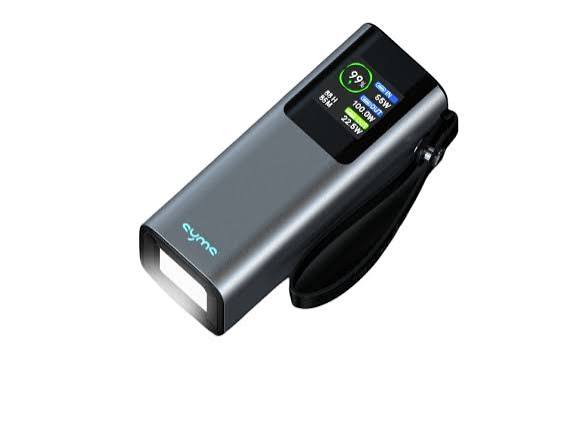
For many years, Nigeria has been celebrated across the world for exporting music, films and creative talent, while relying heavily on imported consumer technology. From smartphones and speakers to power banks and other accessories, the country’s growing digital population has often depended on foreign brands for products that power everyday life. That long standing pattern is beginning to change. The unveiling of the Syms House Party 100W Power Bank and the Syms Wave Speaker by MOL Tech Accessories represents more than the launch of two new gadgets. It reflects the growing confidence of Nigerian innovators to create products tailored to local realities while leveraging the influence of the country’s vibrant entertainment industry.
The collaboration between MOL Tech Accessories and Afrobeats sensation Simi is particularly significant because it demonstrates that innovation is no longer confined to software development or financial technology. It is expanding into consumer electronics, where Nigerian companies are beginning to design products that compete on quality, performance and user experience. The partnership also signals a maturing technology ecosystem in which creative industries are becoming active partners in product development rather than simply serving as marketing channels.
One of the strongest selling points of the Syms House Party Power Bank is its practicality. In a country where electricity supply remains unpredictable, dependable backup power has become less of a luxury and more of a necessity. A 20,000mAh battery capable of delivering 100W output to charge laptops, tablets and smartphones addresses a genuine challenge faced daily by students, journalists, entrepreneurs, content creators, business professionals and remote workers. Features such as fast charging capability, multiple charging ports, a retractable cable and digital battery display further demonstrate that local companies understand the needs of Nigerian consumers.
Equally impressive is the Syms Wave Speaker, a product that acknowledges Nigeria’s deep love for music and entertainment. Music is woven into everyday life across the country, from family gatherings and religious events to outdoor celebrations and commercial activities. A portable speaker with extended battery life, quality sound engineering, dual pairing capability and artist inspired voice prompts appeals directly to this cultural reality. It is technology designed around how Nigerians actually live and celebrate.
Affordability is another area where locally developed products can make a meaningful difference. Premium gadgets have traditionally carried price tags beyond the reach of many consumers because of import costs, exchange rate volatility and logistics expenses. By introducing products that combine advanced specifications with competitive pricing, Nigerian manufacturers are demonstrating that quality does not always have to come at an excessive cost. This creates opportunities for wider adoption while reducing dependence on imported alternatives.
Durability should also be viewed as a strategic advantage. Nigerian consumers are known for demanding products that can withstand harsh environmental conditions, frequent transportation, fluctuating electricity supply and intensive daily use. Companies that design with these realities in mind are more likely to earn customer loyalty than brands that simply import generic products without adapting them to local conditions. If Nigerian manufacturers consistently deliver durable technology, consumer confidence in locally developed products will continue to grow.
The broader implications extend beyond individual gadgets. Every successful Nigerian technology product contributes to the development of local manufacturing, industrial design, product engineering, marketing, logistics and after sales support. It creates employment opportunities for engineers, designers, marketers, software developers, technicians and retail distributors. Each locally produced innovation strengthens the country’s technology value chain while helping retain economic value within Nigeria instead of exporting it through imports.
There is also an important psychological dimension to this development. For decades, many consumers have automatically equated foreign products with superior quality. That perception is gradually changing as Nigerian companies continue to introduce products that match international standards while offering solutions specifically designed for African markets. Confidence in indigenous innovation encourages more young entrepreneurs to invest their talents in research, development and product design.
The entertainment industry adds another layer of value. Nigeria’s music sector has become one of the country’s strongest global brands, earning international recognition and opening new economic opportunities. Partnerships between technology companies and respected artists create authentic connections with consumers because they combine functional value with cultural relevance. Such collaborations allow technology products to become extensions of Nigerian creativity rather than mere electronic devices.
Government policies can further accelerate this momentum by supporting indigenous technology companies through favourable tax incentives, easier access to financing, research grants and procurement policies that encourage the adoption of locally developed solutions where appropriate. Universities, research institutions and private investors also have important roles to play in strengthening innovation ecosystems that nurture hardware development alongside software innovation.
Consumers themselves have a responsibility. Supporting quality Nigerian products is not simply an act of patriotism. It is an investment in local enterprise, job creation, technological independence and national economic growth. However, this support must be earned through consistent quality, excellent customer service and continuous innovation. Local companies cannot rely solely on national sentiment. They must compete on merit.
The introduction of the Syms House Party Power Bank and the Syms Wave Speaker offers an encouraging glimpse into what is possible when Nigerian technology companies combine engineering, creativity and market understanding. These products suggest that the future of Nigerian innovation lies not only in writing software or building digital platforms, but also in designing durable, practical and affordable hardware that reflects the country’s unique needs and aspirations.
If this trajectory continues, Nigeria will no longer be recognised only as a global powerhouse in music and entertainment. It will increasingly be acknowledged as a nation capable of producing world class technology products that stand proudly alongside its creative achievements. That is the kind of progress that deserves attention, investment and sustained support.