

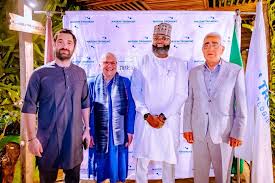
The Executive Vice Chairman and Chief Executive Officer of the National Agency for Science and Engineering Infrastructure, Khalil Suleiman Halilu, has reaffirmed the agency’s commitment to strengthening Nigeria’s healthcare sovereignty through the local production of medical diagnostic technologies, as efforts intensify to reduce dependence on imported healthcare products.
Halilu made the declaration while hosting participants of the Harvard University led Science of Defeating Malaria programme at a closing dinner in Abuja following their visit to the NASENI TROMENT Biotechnologies Factory. The delegation, led by Dyann F. Wirth and comprising about 85 scientists, health professionals and policymakers from different parts of the world, commended the facility’s contribution to healthcare innovation and disease control efforts across Africa. They described the factory as a significant investment in the fight against malaria and other infectious diseases affecting the continent.
Speaking at the event, Halilu said the recognition from the Harvard delegation reinforces the vision behind the biotechnology project, which was established about 18 months ago to boost local manufacturing capacity and enhance Nigeria’s healthcare resilience. He disclosed that the facility has the capacity to produce up to 600 million diagnostic kits annually, a volume capable of meeting about 80 per cent of the country’s testing needs while also positioning Nigeria as an exporter of medical diagnostic products to other African countries and international markets.
The factory currently manufactures rapid diagnostic tests and in vitro diagnostic products under the N CheckUP brand for a range of diseases and health conditions, including malaria, hepatitis B and C, HIV, typhoid, syphilis, COVID 19, pregnancy testing and blood glucose monitoring. Halilu noted that the initiative aligns with NASENI’s broader mandate of using science, technology and innovation to address national challenges, create employment opportunities and strengthen industrial development. The Science of Defeating Malaria programme, which held in Abuja from June 7 to June 13, brought together leading global experts committed to advancing malaria elimination strategies and improving public health systems worldwide.