

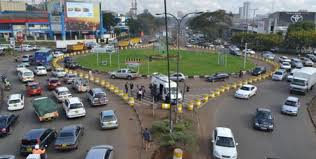
Kenya has allocated KES 1.18 billion for the expansion of Nairobi’s Intelligent Transport System under Phase III of the project, marking a major push toward using artificial intelligence to manage traffic congestion across the capital city.
Treasury documents presented before parliament show the government plans to deploy a network of smart traffic lights, surveillance cameras, and road sensors capable of monitoring and controlling traffic flow in real time across 125 intersections in Nairobi.
The AI driven transport system, being implemented by the Kenya Urban Roads Authority, will connect major intersections to a central command centre located at City Cabanas on Mombasa Road. Officials said the technology will automatically adjust traffic signals depending on congestion levels, detect traffic violations, identify speeding vehicles, monitor red light offences, and track helmet compliance among commercial motorcycle riders. The project represents a significant shift from Nairobi’s long standing dependence on traffic police officers manually controlling traffic at busy junctions.
Government officials said the investment is aimed at reducing the heavy economic cost of congestion in Nairobi, where traffic jams reportedly cost the country about KES 120 billion annually through lost productivity and fuel wastage. The AI system will also support emergency response operations by detecting unusual traffic disruptions caused by accidents and immediately alerting police and rescue teams. According to project documents, the technology mirrors smart traffic systems already deployed in cities such as London and several Chinese urban centres where automated traffic coordination increasingly replaces manual control.
The expansion highlights Kenya’s growing adoption of artificial intelligence and smart city infrastructure as part of broader urban modernisation efforts. However, the rollout has also raised concerns around digital surveillance and privacy, as the system will create one of the country’s largest citywide monitoring networks capable of tracking number plates, traffic behaviour, and automated enforcement activities. The government plans to spend at least KES 5.3 billion on the programme over the next three years, with part of the financing coming from a concessional loan agreement signed with the Export–Import Bank of China.