

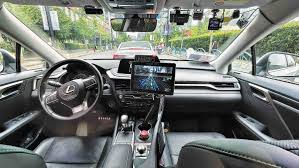
Chinese autonomous driving firm DeepRoute.ai has disclosed that more than 300,000 vehicles on Chinese roads are already equipped with its advanced driver assistance system, with projections to add another one million within the year. The announcement, made by Chief Executive Officer Maxwell Zhou at the Beijing Auto Show, highlights the rapid scale at which intelligent driving technologies are being deployed globally.
For Nigeria’s technology and innovation ecosystem, the development signals both a widening gap and a potential opportunity. While fully autonomous vehicles remain largely absent from Nigerian roads, the underlying technologies such as artificial intelligence, sensor systems, and real time data processing are increasingly relevant to local mobility challenges. Startups working in logistics, ride hailing, and fleet management can adapt elements of assisted driving systems to improve navigation, safety, and operational efficiency within existing transport networks.
Industry observers note that Nigeria’s road infrastructure and regulatory environment may slow the adoption of full autonomy, but incremental innovations are already within reach. Features such as driver assistance alerts, route optimisation, and predictive maintenance systems can be integrated into commercial transport and delivery services, offering immediate value in cities where traffic congestion and road safety remain critical concerns.
The scale achieved in China also underscores the importance of early investment in research, data, and policy frameworks. For Nigeria, the priority may not be autonomous vehicles in the short term, but building capacity in artificial intelligence and mobility technology. As global adoption accelerates, local innovators who begin experimenting with these tools today could be better positioned to develop homegrown solutions tailored to Nigeria’s unique transport realities.