

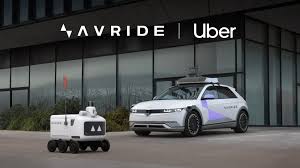
Uber has launched a new division called Uber AV Labs to share real-world driving data with more than 20 autonomous vehicle partners. The move is not a return to Uber’s own robotaxi development, which it stopped after a fatal crash in 2018 and later sold to Aurora. Instead, Uber will deploy its own sensor-equipped cars across cities to collect driving data for partners like Waymo, Waabi, and Lucid Motors.
The industry is shifting away from rule-based self-driving systems toward machine learning models that improve through vast amounts of data. This makes real-world driving data increasingly valuable, especially for handling rare and complex driving situations. Uber says companies already collecting significant data are the most eager for additional sources, signaling that solving edge cases has become a scale challenge.
Self-driving companies face a physical limit based on the size of their fleets, which restricts how much data they can collect. While simulations help, nothing replaces the unpredictability of actual roads. Even established players like Waymo still encounter unexpected failures, such as recently being caught illegally passing stopped school buses. Uber believes broader access to driving data could help identify and correct such issues before they become widespread.
Uber does not plan to charge for the data, at least initially. The company sees the initiative as a way to accelerate the entire autonomous vehicle industry, rather than focusing on immediate profit. Uber AV Labs will process and refine the data before sharing it, providing a “semantic understanding” layer that partners can use to improve real-time decision-making.
Initially, Uber AV Labs is starting with one Hyundai Ioniq 5 equipped with lidar, radar, and cameras, and the division is still testing its sensor setup. Uber plans to run partner software in “shadow mode” to compare human driving decisions with autonomous systems, flagging differences for improvement. Uber expects the division to grow quickly, and it believes its access to 600 cities will allow targeted data collection to meet partner needs.