

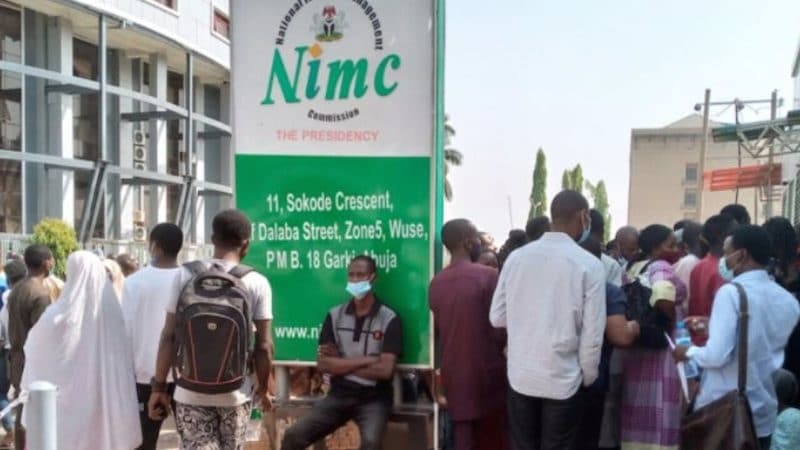
The National Identity Management Commission (NIMC) has said that it relies on the World Bank’s Nigeria Digital Identification for Development (ID4D) project to pay its frontend partners (FEPs), according to the Commission’s Director and Head of Business Development and Commercial Services. This was disclosed during a two-day roundtable with online publishers in Abuja on Wednesday. The director stated, “All our frontend partners get to be paid by the facility that the World Bank is providing.”
The director explained that delays in receiving funds from the World Bank have affected payments to FEPs, noting that the World Bank facility was supposed to help them pay their frontend partners.
She assured that with the final project condition met, payments would commence soon as the World Bank has disbursed $45.5 million, about 10.5% of the total project cost, while one out of three conditions remains unmet to guarantee full fund disbursement.
The World Bank highlighted that the first condition was met with the enactment of the data protection law in June 2023 and the establishment of the data protection commission. This also unlocked financing from two other co-financiers, AFD and EIB. The second condition, related to the National Identity Management System’s (NIMS) acceptability, was fulfilled in March 2024 after improvements to the system.
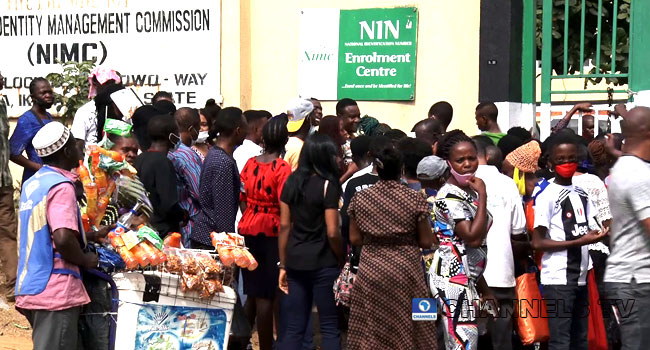
The final condition, the amendment of the NIMC Act to ensure an inclusive and non-discriminatory legal framework, remains pending. The Bank reported significant progress, noting that the amendments have been drafted and await enactment by the National Assembly.
A bill to repeal and reenact the National Identity Management Bill, 2027, passed its second reading in the Senate on Tuesday. Sponsored by Deputy Senate President Barau Jibrin, the bill aims to establish a new regulatory regime for the NIMC and expand the scope of registrable persons to ensure inclusivity and universal coverage.
The director also revealed that FEPs registering Nigerians in conflict or hard-to-reach areas would receive higher pay. “The FEPs’ payment structure rewards those who can register Nigerians in hard-to-reach places with significantly higher pay than those in urban areas like Abuja,” she explained.
Chike Walter Duru, Manager of Internal Communications for the Nigeria Digital Identification for Development (ID4D) Project, acknowledged that while payments to FEPs are ongoing, NIMC lacks all the necessary resources. However, he assured that NIMC management is committed to clearing every legitimate claim.
Director-General of NIMC, Abisoye Coker-Odusote, also explained that discussions are ongoing to settle fines for infractions before debts are paid. NIMC had stated that it would clear outstanding debts to FEPs in the first quarter of 2024. Additionally, 36 licenses have been issued to new frontend NIN enrollment partners, and four mobile network operators have been authorized to enroll for NINs to support the ongoing World Bank-funded National Social Safety Net Program-Scale Up (NASSP-SU) project.