

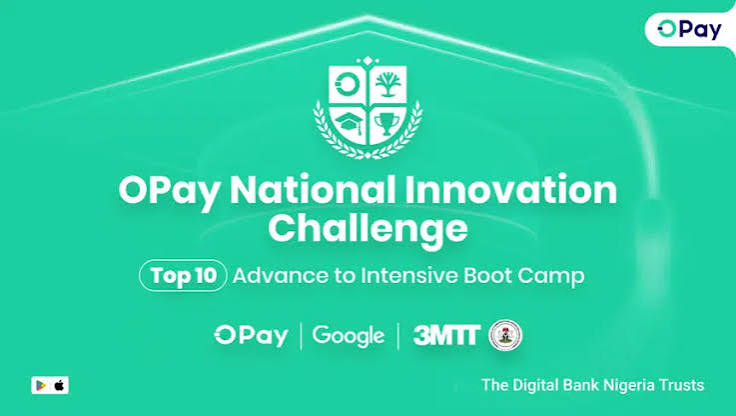
The scale of interest in technology innovation among Nigerian students has come into sharper focus as 10 teams emerge from more than 11,000 students who entered the OPay National Innovation Challenge, an initiative designed to move promising ideas from the classroom towards practical technology solutions. The challenge, organised by OPay in partnership with Google and the Federal Government’s 3 Million Technical Talent programme, attracted more than 2,200 teams from tertiary institutions across the country.
The 10 finalists emerged after an initial selection that produced 48 teams, which subsequently participated in a six week employability webinar aimed at strengthening their technical knowledge, workplace skills and readiness for the next stage. The finalists are Lyrclip from Miva Open University, ResearchFlow from Olabisi Onabanjo University, CampusCheck from Federal University Oye Ekiti, Veripay from Benue State University, CoursePass from Lagos State University of Science and Technology, Teamcobuild from Nnamdi Azikiwe University, Verified Hands from Ahmadu Bello University, SkoolConnectNG from Yaba College of Technology, Thrifty from Ahmadu Bello University and Team Paye from Adeleke University.
The finalists will now proceed to an intensive boot camp where they will work with experienced mentors and industry professionals to further develop, test and refine their solutions ahead of the final stage. The programme carries a ₦18 million prize pool, while participants may also gain access to practical industry experience and career opportunities through the OPay Futures pipeline, including potential three month internship placements for qualifying students.
The development points to a wider shift in Nigeria’s technology ecosystem, where student innovation programmes are increasingly being linked to skills development, mentorship and employment pathways rather than stopping at competitions and awards. With OPay, Google and 3MTT involved in the initiative, the challenge is also bringing private sector, international technology and government resources into the same talent development pipeline. As the 10 teams enter the boot camp, the focus will now be on whether their ideas can be transformed into workable solutions capable of addressing real problems and participating meaningfully in Nigeria’s expanding digital economy.