

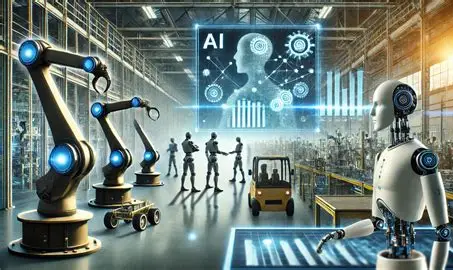
Technology companies and researchers are intensifying efforts to integrate artificial intelligence into physical machines, as the global robotics industry moves beyond software-based applications towards developing intelligent systems capable of performing real-world tasks.
The growing interest in AI-powered robotics is driven by advances in machine learning, computer vision and generative AI, which are enabling machines to understand their environments, process information and respond to changing situations. Unlike traditional robots programmed to perform specific repetitive activities, the emerging generation of intelligent machines is being developed to learn from experience and undertake more complex operations with limited human intervention.
The development is attracting growing interest across manufacturing, healthcare, agriculture, logistics and other industries where intelligent machines could improve productivity, reduce operational costs and handle tasks that are difficult or dangerous for humans. Technology firms are also investing in the combination of advanced computing systems, sensors and robotic hardware to make AI applications more useful beyond computers and mobile devices.
However, the transition from artificial intelligence software to physical machines presents challenges involving development costs, safety, reliability, energy consumption and the ability of robots to operate effectively in unpredictable environments. As competition intensifies, the industry’s ability to overcome these limitations could determine how quickly AI-powered robotics moves from experimental projects into widespread commercial and industrial applications.