

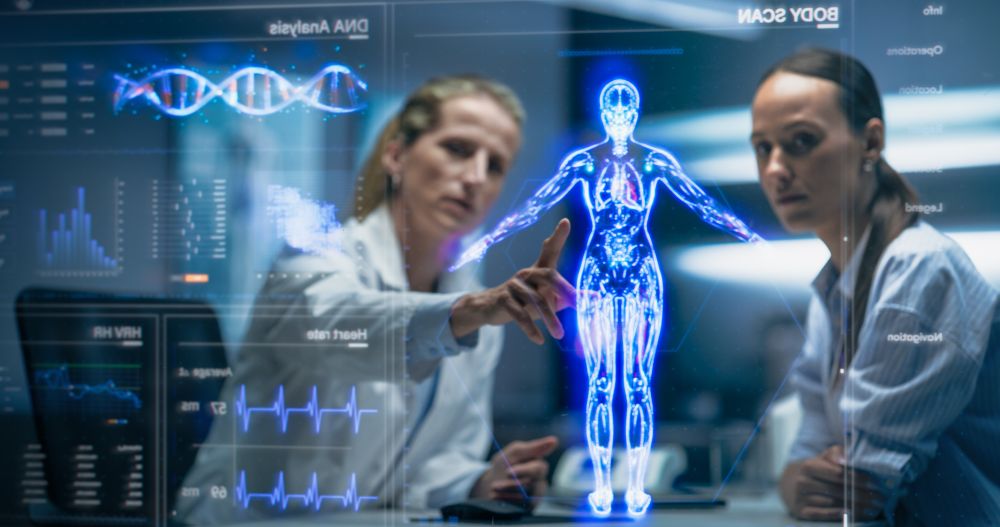
Mantis Biotech is developing a new approach to improve medical research by using artificial intelligence to create “digital twins” of the human body. These are virtual models that simulate how the body works, helping scientists study diseases, test treatments, and predict health outcomes. The idea comes at a time when large language models are showing promise in healthcare, but still struggle with rare diseases and unusual conditions where data is limited.
The company’s platform works by gathering information from many sources such as medical records, imaging, sensors, and training data, then combining and refining it using AI. It also uses a physics based system to make the models more realistic, ensuring that the synthetic data behaves like real human biology. According to founder and CEO Georgia Witchel, this approach helps fill gaps where real world data is missing, making it easier to study complex or rare medical cases.
These digital twins can be used in several ways. Researchers can simulate medical procedures, train surgical robots, or predict how a patient might respond to treatment. In sports, for example, teams can use the technology to monitor athletes and predict injury risks based on their performance, training, and physical condition over time. This makes it useful not just in hospitals, but also in fields like professional sports and performance science.
Mantis Biotech has already attracted early funding and interest, including support from Y Combinator and other investors. The company plans to expand its technology further and eventually make it available for wider use, especially in preventive healthcare and drug research. If successful, the platform could help researchers work faster, reduce reliance on sensitive patient data, and open up new ways to understand and treat diseases.