

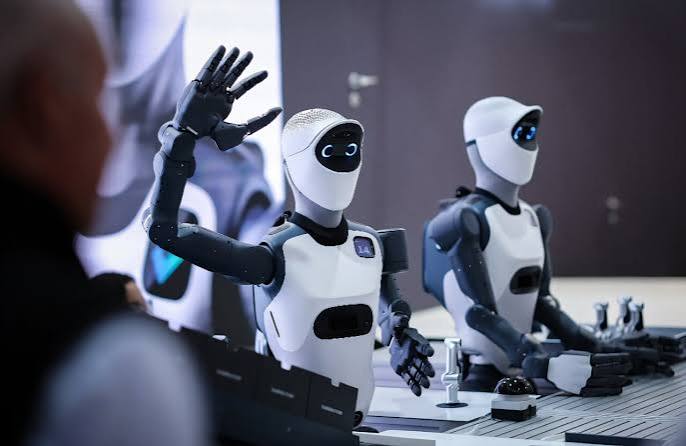
Global technology and education leaders are calling for stronger investment in artificial intelligence (AI) skills as advances in robotics and automation reshape industries, public services and workplace demands. The call reflects growing concerns that workers without relevant digital skills could struggle to remain competitive as AI systems take on increasingly complex tasks.
The discussions took centre stage at Ai Everything Abu Dhabi 2026 in the United Arab Emirates, where government officials, technology executives and education leaders highlighted workforce training, curriculum reform and humanoid robotics as priorities for the next phase of technological development. Mariam Al Musharrekh, Director General of Government Talent at Abu Dhabi’s Department of Government Enablement, said the emirate had trained 30,000 government employees in AI, with a 95 per cent completion rate, as it works towards becoming the world’s first AI native government by 2027.
Marc Raibert, founder of Boston Dynamics and executive director of the Robotics and AI Institute, described humanoid robotics as one of the industry’s most challenging frontiers. He said advances in reinforcement learning and large language models were improving robots’ mobility, ability to interpret instructions and capacity to interact with humans. Research cited by the Bank of America Institute projects that annual humanoid robot shipments could rise from 90,000 in 2026 to 10 million by 2035, although actual adoption will depend on technological progress and commercial demand.
The growing demand for AI skills is also putting pressure on universities and training institutions to prepare students for jobs that require critical thinking, creativity, adaptability and practical problem solving alongside technical knowledge. For Nigeria, the development presents an opportunity to strengthen digital education, expand access to AI training and prepare young people for emerging technology careers. However, limited infrastructure, the cost of training and unequal access to digital tools remain challenges that policymakers and educational institutions must address if Nigerian workers are to benefit from the expanding AI economy.