

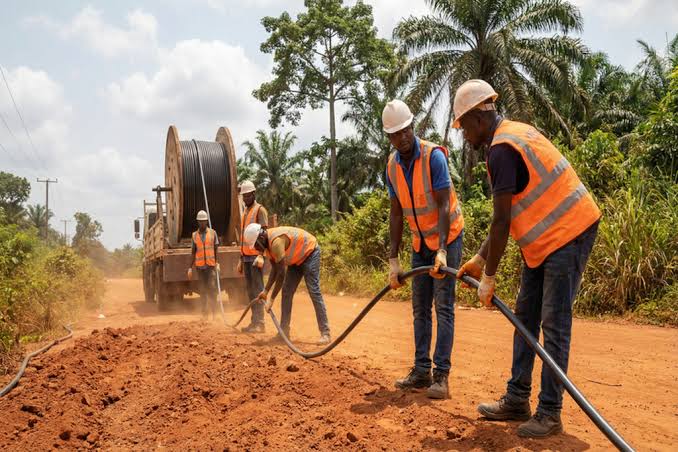
Nigeria’s ongoing fibre rollout is reshaping the country’s broadband market, lifting speeds and expanding access to faster networks. Recent data shows median download speeds surged 155% from 13.50 Mbps in 2023 to 34.47 Mbps in the first half of 2026, while upload speeds nearly doubled. More importantly, the biggest gains are among users with the weakest connections, signalling that fibre is raising the broadband floor rather than just pushing top speeds higher.
Subscriber growth underscores the shift. Fibre-to-the-Premises connections jumped from 84,141 in late 2025 to 265,000 by mid-2026, overtaking Fixed Wireless Access as Nigeria’s dominant fixed broadband technology. Analysts note that moving households from poor connections to entry-level fibre plans delivers transformative improvements, far more impactful than incremental upgrades for already fast users.
Yet challenges loom. Operators must expand capacity, reach less profitable areas, and persuade customers to pay for faster plans. Affordability remains a major hurdle, especially outside major cities where fibre deployment costs are high. Experts warn that without flexible pricing models such as prepaid or weekly plans, fibre adoption could stall, leaving rural and low-income households behind.
Infrastructure sharing is emerging as a critical solution. Building national and international fibre networks is prohibitively expensive for most ISPs, making shared backbones and open-access policies essential to reduce costs and foster competition. The real measure of Nigeria’s broadband progress will not be kilometres of fibre laid, but whether more people can afford reliable, high-quality internet across cities, towns, and rural communities.