

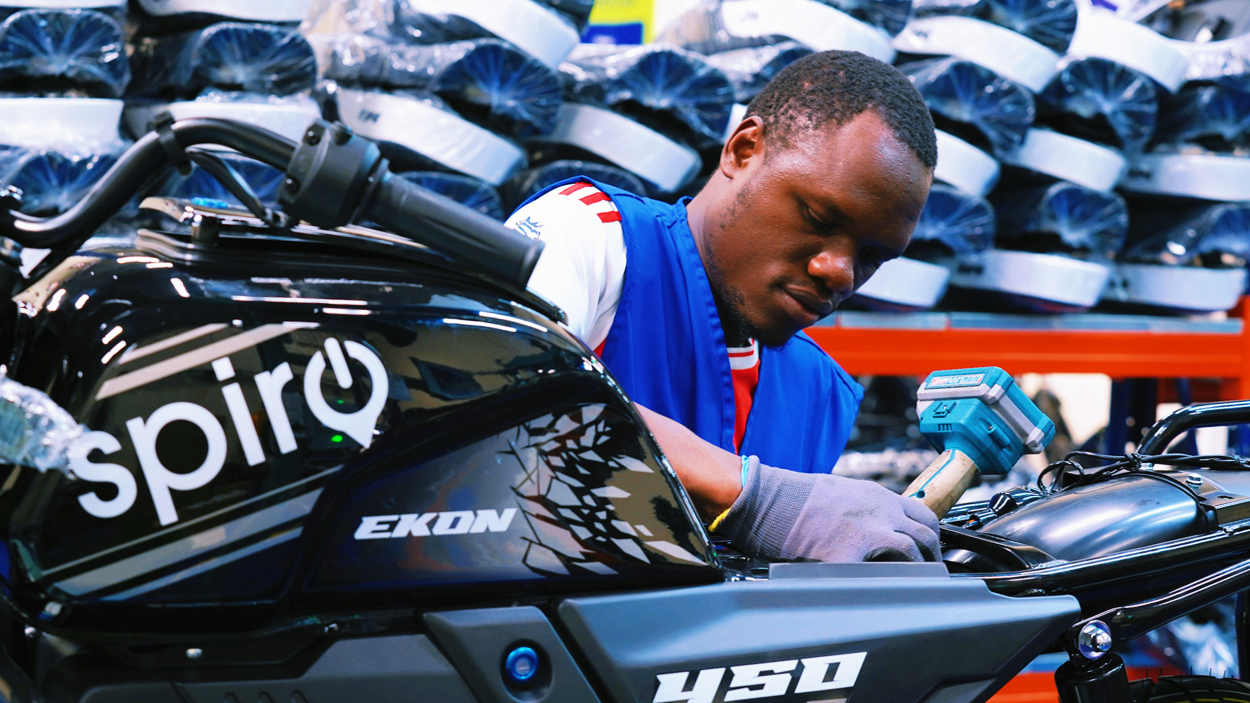
An African electric mobility company, Spiro, has secured 50 million dollars in debt financing to accelerate its expansion of battery swapping infrastructure across the continent, underscoring the rising capital demands of Africa’s fast growing electric two wheeler market.
The facility, backed by Afreximbank, Nithio, and Africa Go Green Fund, comes months after the company raised 100 million dollars in October 2025, signaling sustained investor appetite for capital intensive e mobility ventures.
The back to back funding rounds reflect a sector transitioning from pilot schemes to full scale commercial deployment, where access to long term financing is emerging as a decisive competitive edge. Industry analysts note that companies able to secure structured debt at scale are better positioned to entrench charging networks, lock in riders, and shape pricing across key urban corridors. Spiro’s latest raise suggests lenders are growing more comfortable with the revenue predictability of battery swapping models anchored on recurring usage.
Founded in 2022, Spiro operates in Kenya, Uganda, Rwanda, Nigeria, Benin, and Togo, and says it has deployed over 80,000 electric motorcycles alongside more than 2,500 battery swapping stations. The company reports completing 30 million battery swaps to date, giving it one of the largest installed bases in Africa’s emerging electric motorcycle segment. Chief Executive Officer, Kaushik Burman, said demand for the company’s infrastructure continues to grow as riders seek reliable and cleaner transport alternatives.
Under its model, riders purchase or lease electric motorcycles and exchange depleted batteries for fully charged units at designated swap stations in under five minutes. By retaining ownership of the batteries, Spiro converts energy consumption into a recurring revenue stream rather than relying solely on one off vehicle sales. The decision to rely on debt financing indicates a strategic move to scale operations without further equity dilution following last year’s nine figure capital injection.
Despite rapid expansion, execution risks remain. Battery swapping models depend heavily on network density and consistent uptime, particularly in markets such as Kenya where over 1.9 million registered motorcycles operate, largely as commercial taxis.
However, uneven grid reliability in parts of East Africa continues to pose operational constraints, affecting how quickly stations recharge battery packs. While electric motorcycles offer lower operating costs compared with petrol powered bikes, operators cite battery depreciation, imported components, and currency volatility as ongoing pressures that could shape margins as the sector matures.