

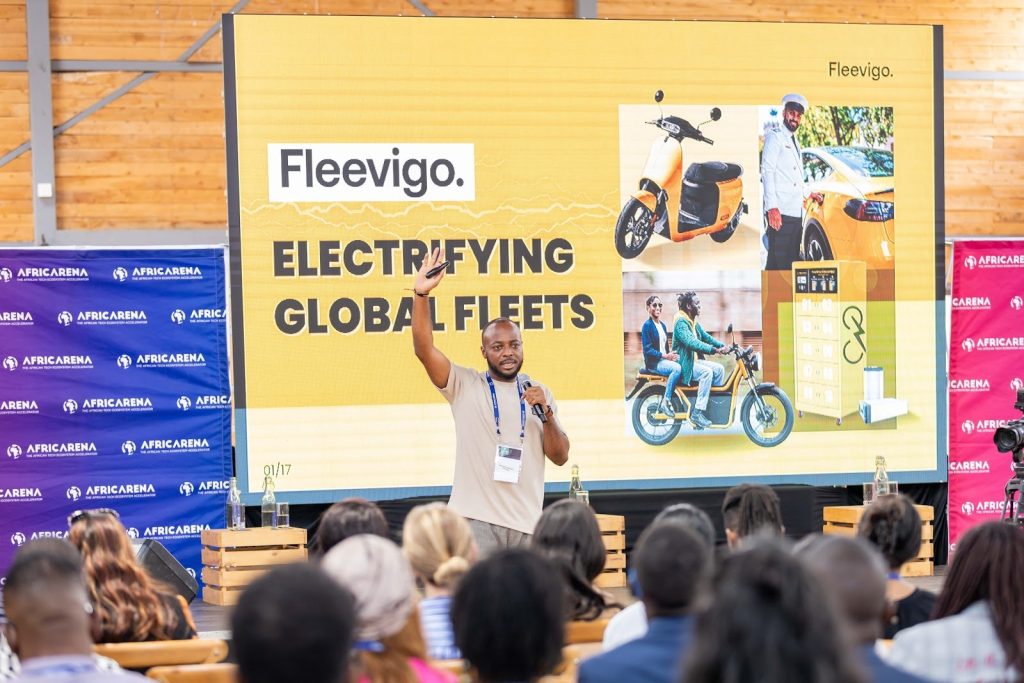
A Nigerian engineer, Damilola Ogunleye, is spearheading the expansion of electric vehicle mobility across East Africa after a career journey that has taken him from China’s aerospace classrooms to Nigeria’s fintech boom and now to the frontlines of sustainable transport innovation. Ogunleye, who left Nigeria at 16 to study in China, currently leads African operations for Fleevigo, a Malta based electric mobility startup that is scaling its footprint in Kenya and exploring other African markets.
Ogunleye studied aircraft manufacturing at Shenyang Aerospace University and later earned a master’s degree in mechanical engineering and automation from Northeastern University in China. Though initially on a path toward aviation, internships with BMW reshaped his career trajectory and drew him into the automotive ecosystem. His exposure to large scale manufacturing systems and cross border technical partnerships laid the foundation for his current focus on electric mobility solutions tailored to emerging markets.
After returning to Nigeria in 2018, Ogunleye joined OPay as a Senior Product Manager at a time when the fintech company was expanding aggressively across multiple cities. He later founded Viajio, a geo travel documentation and experience platform designed to digitize curated travel services in Nigeria. Although the startup eventually shut down due to capital constraints, the experience sharpened his entrepreneurial outlook. In 2022, he relocated to Malta under a digital nomad visa scheme, where a chance meeting with Fleevigo’s founders at an exhibition in 2023 opened a new chapter in his career.
Since formally commencing operations in 2024, Fleevigo has launched electric motorcycle services in Kenya under a model that allows riders to operate without upfront deposits, using a revenue sharing structure in partnership with ride hailing platform Bolt. The company imports and retains ownership of the bikes while retrofitting local shops into battery swap hubs, enabling decentralized charging infrastructure. Ogunleye said the model empowers riders, reduces fuel costs, and strengthens small businesses that earn additional income from battery swaps.
As Nigeria’s Senate advances the Electric Vehicle Transition and Green Mobility Bill to second reading in November 2025, Ogunleye expressed confidence that the country is positioned for rapid EV adoption once policy and infrastructure align.
He noted that incentives for local manufacturing and clearer regulatory frameworks would accelerate uptake, adding that his experience across Asia, Europe and Africa has convinced him that electric mobility in Africa is not a distant aspiration but an unfolding reality driven by economics, technology and strategic partnerships.