

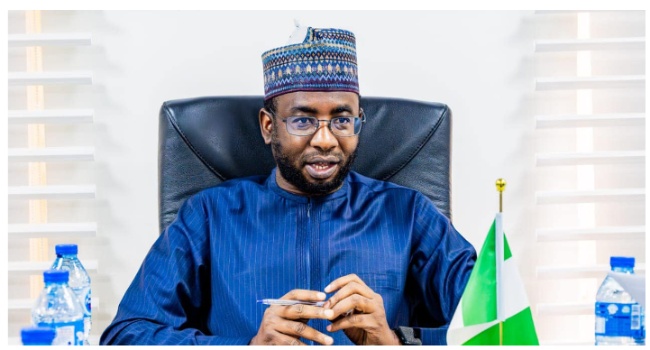
Kashifu Inuwa, the Director-General of the National Information Technology Development Agency (NITDA), has urged African countries to focus on small language models (SLMs) and talent development rather than attempting to match global players in building massive AI infrastructure. Inuwa believes that SLMs tailored to local contexts present a strategic opportunity for Africa to leapfrog limitations posed by underdeveloped infrastructure. He cited Afro-SLM, developed by Nigerian startup EqualyzAI, as an example of lightweight AI suited for African languages and offline environments.
Despite missing out on recent AI infrastructure investments in countries like Egypt, Inuwa attributes Nigeria’s position not to lack of ambition but to strategic timing. He highlighted Nigeria’s 2016 Local Content Guidelines, revised in 2018 and 2019, which laid the foundation for data residency and local cloud capacity. NITDA’s ongoing eight-pillar roadmap prioritises digital talent, infrastructure, research, regulations, innovation, and government digitalisation. He revealed ongoing collaborations with Google to position Nigeria as a regional AI and cloud hub, with discussions around sovereign cloud frameworks, AI adoption, and talent pipelines.
Inuwa emphasized the need for AI systems that reflect local cultures and values, stressing that data-driven decisions must not marginalise African populations. To this end, NITDA is working to establish data classification policies and digital public infrastructure (DPI) standards to drive digitisation of government services. He noted that only 5–10% of government services are currently digitised and highlighted partnerships with institutions like the Nigerian Interbank Settlement System (NIBSS) and Nigerian Financial Intelligence Unit (NFIU) to advance digital payment and data exchange systems.
Looking ahead, the NITDA chief envisions Nigeria emerging as a digital powerhouse in West and Central Africa by leveraging its 90,000km fibre rollout and undersea cables. He noted that Nigeria’s cloud infrastructure could serve neighbouring landlocked countries, but stressed the need to build a trust-based ecosystem. According to him, the nation’s push toward digitising services, expanding AI applications, and building a robust regulatory and technical framework could attract major hyperscalers and position the country competitively in the global AI landscape