


In a heated exchange of accusations and concerns over global security, Chinese military and state-run media have taken aim at the United States following reports of Elon Musk’s SpaceX involvement in a classified satellite project for a U.S. intelligence agency. The tension escalated after a Reuters report revealed SpaceX’s Starshield unit was tasked with building hundreds of spy satellites under a $1.8 billion contract with the National Reconnaissance Office (NRO).
According to sources cited in the Reuters report, the development of the satellite network has ignited a firestorm of criticism from Chinese quarters. The People’s Liberation Army (PLA), through its social media channels, condemned the SpaceX program as evidence of American “shamelessness and double standards,” particularly in light of Washington’s accusations against Chinese tech companies for purportedly compromising U.S. security.
“We urge U.S. companies to not help a villain do evil,” admonished Junzhengping, an influential PLA-run social media account with over 1.1 million followers on Weibo. The post underscored the need for global vigilance against perceived threats emanating from U.S.-led initiatives, echoing sentiments expressed by Wang Yanan, chief editor of Aerospace Knowledge, a publication overseen by China’s ruling Communist Party.
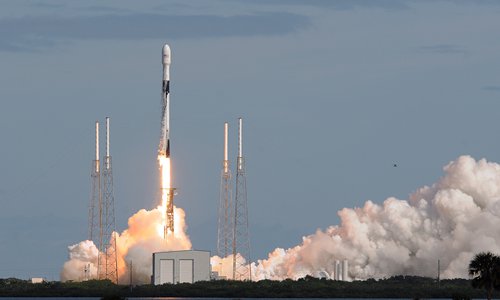
In an interview with The Global Times, Wang Yanan highlighted the SpaceX satellite project as a direct challenge to global security and stability, arguing that the United States’ aggressive intelligence reconnaissance efforts could exacerbate existing geopolitical tensions. Despite the gravity of these concerns, neither Junzhengping nor The Global Times directly referenced Musk or his other ventures, notably Tesla, which maintains a significant manufacturing presence in China.
In response to inquiries sparked by the Reuters report, the NRO acknowledged its role in developing space-based surveillance systems but refrained from divulging specifics regarding SpaceX’s involvement. Similarly, SpaceX, the preeminent satellite operator globally, remained tight-lipped, declining to comment on the classified contract.
It’s important to note that the Starshield network, which SpaceX is developing, is distinct from its commercial broadband constellation, Starlink. The latter aims to provide internet connectivity on a global scale, boasting approximately 5,500 satellites already in orbit. However, concerns raised by Chinese researchers within the PLA about the potential militarization of Starlink, particularly in light of its observed use in conflicts such as the war in Ukraine, underscore the broader geopolitical implications of SpaceX’s endeavors.
Meanwhile, China has signaled its intent to develop its own satellite constellations, further intensifying the competition for dominance in space-based technologies. Despite mounting tensions, neither SpaceX, the NRO, nor the Pentagon have offered immediate responses to China’s reaction to the classified contract, leaving the situation ripe for further diplomatic and strategic maneuvering on the global stage.
 wpcore