

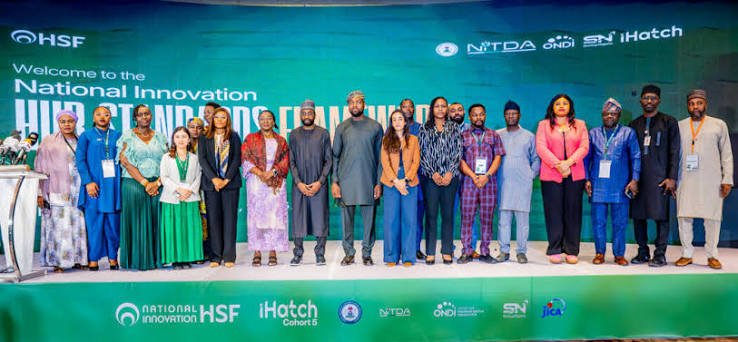
The National Information Technology Development Agency (NITDA) is targeting at least two functioning innovation hubs in every state of the federation as part of efforts to decentralise Nigeria’s technology ecosystem, expand opportunities for young entrepreneurs and stimulate digital economic growth beyond established technology centres. NITDA Director General, Kashifu Inuwa Abdullahi, disclosed the plan during the foundation laying ceremony for the Renewed Hope Startup Hub in Abuja, a project supported by a $10.4 million grant from the Japanese government through the Japan International Cooperation Agency (JICA).
The proposed expansion is expected to provide entrepreneurs across the country with improved access to incubation programmes, technical facilities, mentorship and other resources needed to transform ideas into commercially viable products and businesses. The initiative also seeks to address the concentration of technology activities in Lagos, Abuja and a handful of other urban centres, which has limited access to entrepreneurial support for innovators in many states. According to NITDA, its existing programmes have supported more than 995 startups and contributed to the creation of 7,596 jobs.
Abdullahi said the agency had also expanded its startup development initiatives through programmes implemented with JICA. Under the iHatch programme, 333 startups across Nigeria’s 36 states and the Federal Capital Territory received training between 2025 and early 2026, alongside 74 innovation hub managers. The agency has further supported women entrepreneurs through targeted programmes, while JICA is working with the Nigeria Sovereign Investment Authority on a proposed $50 million seed funding facility intended to improve access to early stage capital for startups.
However, the success of the proposed nationwide expansion will depend on more than establishing physical facilities. Consistent funding, reliable electricity and internet access, skilled personnel, effective mentorship and connections to investors and markets will be critical to ensuring that the hubs deliver measurable results. If properly implemented, the initiative could help young Nigerians develop locally relevant technology solutions, build sustainable businesses and create employment opportunities without having to relocate to major cities to participate in the country’s digital economy.