

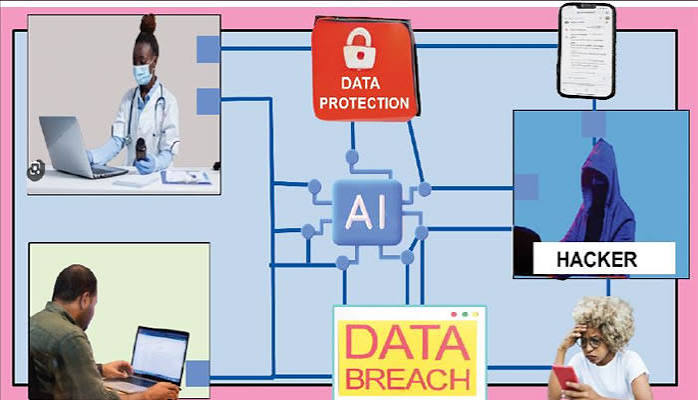
As artificial intelligence tools become increasingly integrated into everyday communication, research and business activities, concerns are growing over how much control users retain over the personal information they share with these platforms. From documents uploaded for analysis to private conversations and business records entered into AI assistants, the expanding use of the technology is raising questions about data ownership, privacy protection and the responsibilities of technology companies.
The concern extends beyond the collection of personal information to how such data may be stored, processed, retained or used to improve AI systems. Depending on the platform and its privacy settings, information supplied by users may be handled in different ways, making it important for individuals and organisations to understand the terms governing their use of these services. For Nigerian businesses, journalists, researchers and public institutions, the risks could be particularly significant when confidential sources, unpublished reports, financial records or sensitive organisational information are submitted to external AI tools.
The debate also highlights the importance of Nigeria’s data protection framework, including the Nigeria Data Protection Act 2023, which establishes obligations concerning the lawful processing of personal data. Although using an AI platform does not automatically mean surrendering ownership of every piece of information supplied, users may have limited visibility into how their data is processed by service providers and their partners. Clear privacy policies, meaningful consent, appropriate security measures and effective accountability are therefore essential to building public confidence in AI adoption.
Technology experts and organisations are consequently being challenged to treat data protection as a central part of responsible AI deployment rather than an afterthought. Users, meanwhile, are advised to review privacy settings, understand the data policies of the platforms they use and avoid submitting passwords, confidential documents or sensitive personal information unless adequate safeguards are in place. As AI adoption expands across Nigeria, the question is no longer simply what these systems can do, but whether people can use them confidently without losing control over information that matters to them.