

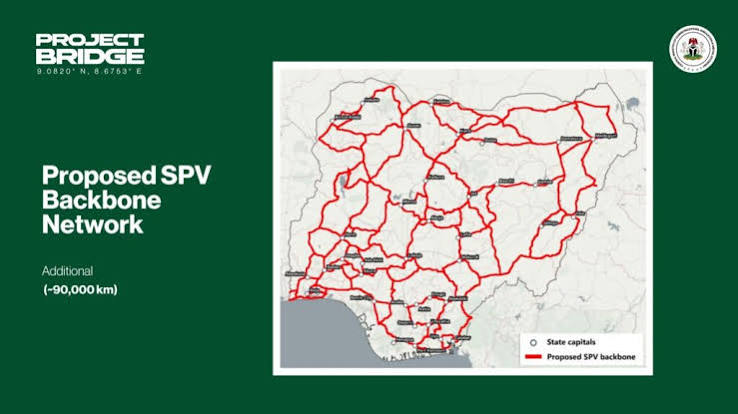
The Federal Government is set to register the Special Purpose Vehicle (SPV) that will drive Project BRIDGE, a major digital infrastructure initiative aimed at deploying at least 90,000 kilometres of fibre optic network across Nigeria by 2030. According to the Federal Ministry of Communications, Innovation and Digital Economy, the incorporation of the SPV will establish the legal framework for the project, which is expected to mobilise private investment and coordinate fibre deployment across the 36 states and the Federal Capital Territory.
Designed as an open access wholesale network, Project BRIDGE will provide shared fibre infrastructure for mobile network operators, internet service providers and enterprise customers, reducing the cost of broadband expansion. Backed by a financing package of about $1.6 billion, including $500 million from the World Bank and additional support from the African Development Bank, the European Bank for Reconstruction and Development and BADEA, the project aims to expand Nigeria’s fibre backbone to about 120,000 kilometres and connect more than 770 local government areas.
Large scale construction is expected to begin in 2027 after the SPV completes investor selection, engineering designs, route surveys, regulatory approvals and right of way agreements. The project targets an increase in broadband users from about 92 million to 150 million by 2030, a 17 per cent reduction in wholesale bandwidth costs, improved broadband speeds and high speed internet connectivity for more than 59,000 public institutions, alongside digital literacy training for 37,000 Nigerians.
Despite its ambitious goals, Project BRIDGE faces significant implementation challenges, including funding, governance, inflation, foreign exchange volatility, right of way approvals and the protection of fibre infrastructure from vandalism. The World Bank has classified the programme as carrying substantial risk, but the government believes successful execution will strengthen Nigeria’s digital economy by lowering connectivity costs, expanding broadband access and accelerating digital inclusion nationwide.