

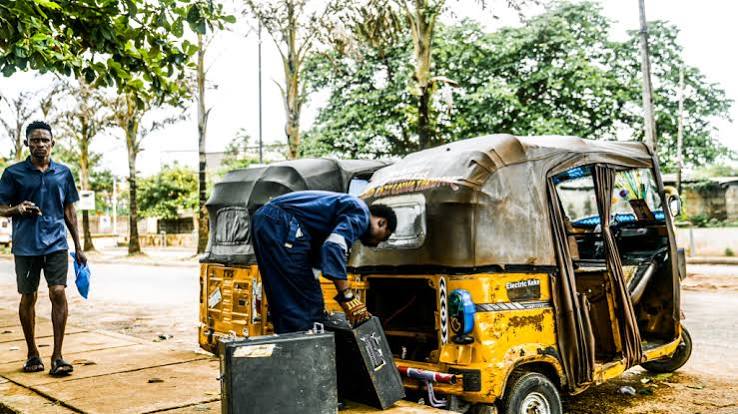
Nigerian electric mobility startup Swap is accelerating the adoption of electric commercial tricycles in Lagos by offering free conversions of petrol powered kekes into battery powered vehicles, helping drivers reduce fuel and maintenance costs. Since launching in May 2024, the company has converted more than 300 tricycles and says over 100,000 operators are on its waiting list, reflecting growing demand for affordable and cleaner transportation solutions.
The company’s battery as a service model allows drivers to swap depleted batteries for fully charged ones at dedicated stations within two minutes instead of refuelling with petrol. Drivers such as Moses, who converted his tricycle two years ago, say the switch has eliminated frequent engine repairs while reducing daily operating expenses. Many operators also report spending less on maintenance compared to conventional petrol powered tricycles, particularly as fuel prices continue to rise.
Despite the growing interest, unreliable electricity supply remains one of the company’s biggest operational challenges. At its Ikorodu station, prolonged power outages have forced Swap to rely on diesel generators to charge batteries, significantly increasing operating costs and reducing charging capacity. The occasional battery shortages have also affected drivers’ daily earnings, although many insist the electric vehicles remain more economical than their petrol counterparts.
Founded by Timilehin Odusina, Seyi Oguntunde and Emmanuel Marchie, Swap said its business model was designed around affordability rather than environmental concerns, recognising that lower operating costs would drive adoption in Nigeria. Chief Executive Officer Seyi Oguntunde said access to financing remains the company’s biggest hurdle, as every vehicle conversion requires substantial upfront investment before costs can be recovered through battery swap payments.
To support expansion, Swap plans to establish a hub and spoke network of battery charging depots and franchised swapping stations across Lagos. The startup joins other electric mobility companies, including Bolt, MAX, Spiro and Ecowaka, in advancing Nigeria’s transition to electric transportation. Industry observers believe the company’s free conversion model could accelerate electric vehicle adoption among commercial transport operators, provided reliable electricity and long term financing become more readily available.