

For generations, choosing a university course has often been guided by tradition, family expectations and societal prestige rather than the realities of the changing global economy. Many young people still pursue degrees because they are considered respectable or because they have been passed down as conventional pathways to success. However, the world of work is undergoing a historic transformation, driven by artificial intelligence, robotics, automation, data science and other emerging technologies. For prospective university students, the most important question today is no longer just “What course sounds prestigious?” but “What knowledge and skills will remain valuable in the future?”
The rapid advancement of technology has fundamentally changed how societies produce, communicate, solve problems and create wealth. Artificial Intelligence, robotics, biotechnology, cybersecurity, renewable energy technology and advanced computing are no longer ideas reserved for science fiction. They are becoming central to healthcare, agriculture, finance, education, manufacturing, transportation and governance. Countries that invest heavily in these fields are building stronger economies, while those that fail to adapt risk remaining consumers rather than creators of technology.
Artificial Intelligence, in particular, has emerged as one of the most influential technologies of the 21st century. From medical diagnosis and financial analysis to education platforms and business automation, AI is transforming industries and creating new categories of employment. Students who develop expertise in AI, machine learning, data analytics and intelligent systems will not only have access to global opportunities but will also be positioned to develop solutions to local challenges.
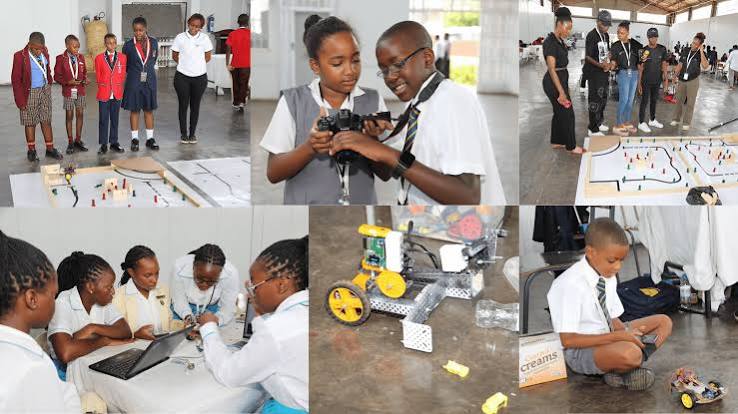
Robotics is another field that holds enormous potential for future development. Modern economies increasingly depend on automated systems to improve productivity, reduce risks and perform complex tasks. Robotics engineers are helping industries develop machines that can support healthcare delivery, improve agricultural production, enhance manufacturing and assist people with disabilities. For countries seeking industrial growth, investing in robotics education is essential for building a workforce capable of competing in the global technology economy.
While traditional disciplines such as law, humanities, social sciences and some areas of management remain important, the challenge is ensuring that university education remains connected to contemporary realities. Knowledge must translate into innovation, problem solving and economic value. A degree that does not equip graduates with relevant skills, critical thinking ability or adaptability may leave young people struggling in an increasingly competitive labour market.
The global employment landscape is already changing. Many routine tasks previously performed by humans are being automated, while new opportunities are emerging for people with technological expertise. Employers are increasingly searching for graduates who can combine academic knowledge with digital competence, creativity and problem solving abilities. A student with knowledge of AI, coding, data analysis or automation can apply those skills across multiple industries, making them more adaptable and employable.
For developing countries like Nigeria, encouraging young people to pursue emerging technology courses is not merely about securing individual careers; it is about national development. Nigeria faces challenges in healthcare, agriculture, education, transportation and security that require innovative solutions. A new generation of technology professionals can design systems that address these challenges, create businesses, generate employment and contribute to economic growth.
Universities also have a responsibility to rethink their academic priorities. Higher institutions must move beyond producing graduates who only seek employment and begin producing innovators, entrepreneurs and problem solvers. Courses should increasingly reflect the demands of the modern economy by integrating artificial intelligence, digital entrepreneurship, cybersecurity, robotics and other emerging fields into academic programmes.
However, choosing contemporary courses does not mean abandoning all traditional knowledge. The future belongs to individuals who can combine technology with human understanding. For example, an AI expert with knowledge of healthcare can develop better medical solutions, while a technology specialist with agricultural knowledge can create innovations that improve food production. The most valuable graduates will be those who combine technological skills with expertise in specific areas of human need.
Parents, educators and prospective students must therefore reconsider outdated perceptions about university education. The value of a degree should not only be measured by its historical reputation but by its relevance to current and future challenges. Encouraging young people to study fields such as artificial intelligence, robotics, software engineering, data science, renewable energy and advanced technology is an investment in their future and the future of society.
The rise of emerging technologies presents both challenges and opportunities. While automation may disrupt some traditional jobs, it will also create new industries and career paths that are yet to be fully imagined. Students who prepare themselves with future focused skills will have the confidence and capacity to participate actively in this transformation rather than being left behind by it.
Ultimately, the university choices made by today’s young people will determine their place in tomorrow’s economy. The future will belong to nations and individuals who understand technology, innovate continuously and apply knowledge to solve real problems. For prospective university students, studying contemporary and technology driven courses such as artificial intelligence, robotics and related disciplines is not simply a career decision; it is a strategic investment in becoming part of the generation that will shape the future.