

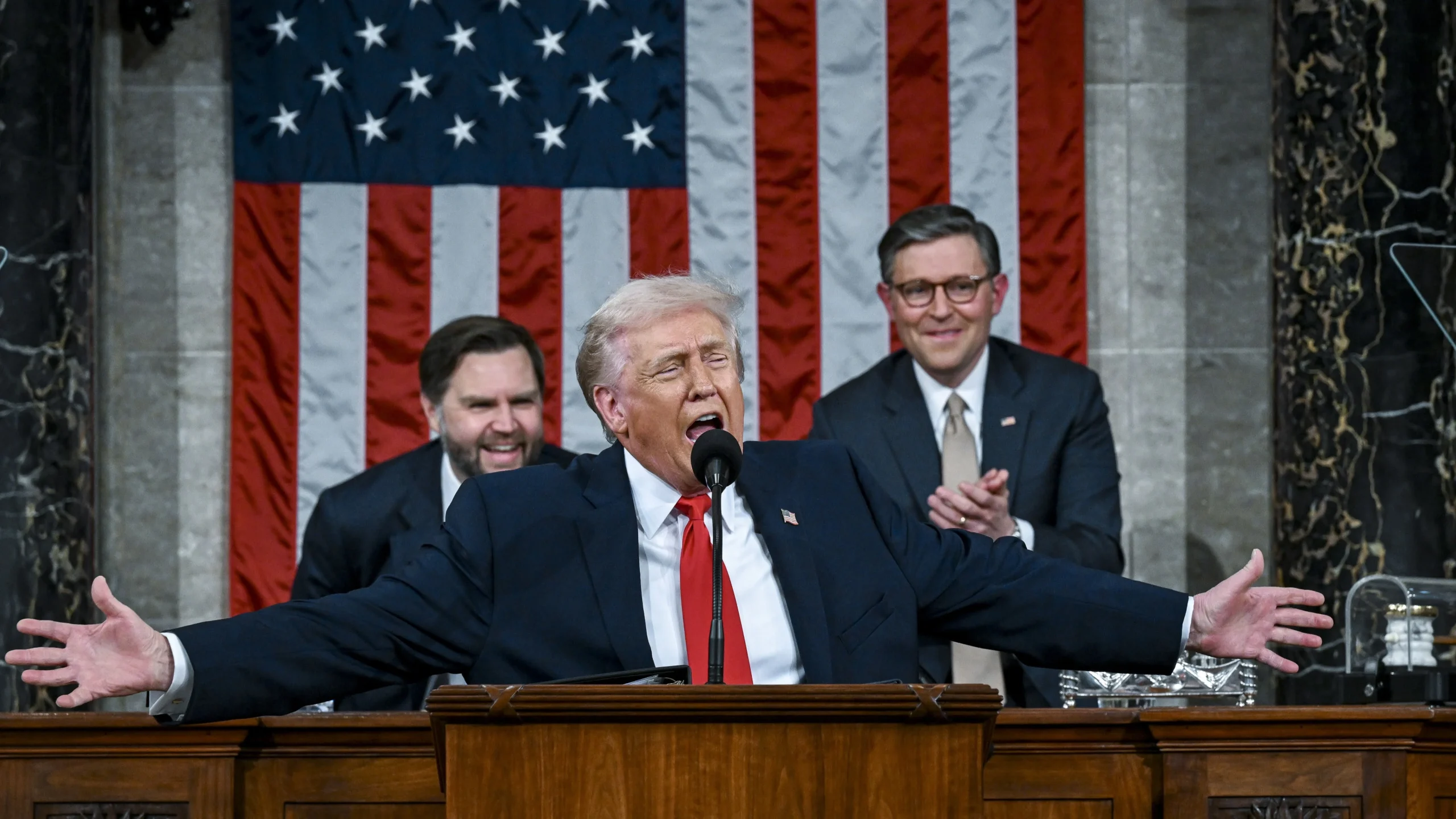
U.S. President Donald Trump is set to meet with leaders of Google, Meta and OpenAI on Wednesday to formalise a new commitment designed to shield American households and small businesses from rising electricity bills linked to the rapid expansion of artificial intelligence infrastructure. The White House said the initiative, known as the Ratepayer Protection Pledge, was first unveiled during Trump’s recent State of the Union Address.
According to administration officials, the pledge will require major technology companies to adopt measures that prevent the growth of energy intensive data centres from driving up utility costs for ordinary consumers. The move comes amid growing concern that the surge in AI computing capacity is placing additional strain on regional power grids across the United States.
Sources familiar with the discussions indicated that the framework may include commitments by participating firms to finance upgrades to power transmission and distribution systems. Companies could also negotiate specialised electricity pricing structures with utility providers to offset the impact of their large scale consumption.
Firms such as Google, Meta and OpenAI have collectively invested billions of dollars in artificial intelligence development, with data centres that require vast amounts of electricity to power servers, cooling systems and supporting infrastructure. Industry analysts note that the energy demand of advanced AI models continues to grow as companies scale their operations to maintain technological leadership.
President Trump has repeatedly urged technology companies to build or secure dedicated power capacity rather than depend solely on existing regional grids. The approach is aimed at balancing the country’s ambition to remain globally competitive in AI with the need to protect consumers from bearing indirect costs of private sector expansion.
Energy policy experts, however, caution that structural challenges in the power sector may limit the immediate impact of the pledge. Jon Gordon, a director at Advanced Energy United, observed that the fundamental issue lies in the pace at which new power generation can be brought online, noting that financial commitments alone may not accelerate infrastructure timelines.
Lawmakers and consumer advocacy groups have also intensified calls for regulatory safeguards to ensure that utility rate adjustments do not disproportionately affect residential customers. As discussions between the White House and technology leaders proceed, the outcome is expected to shape how the United States manages the intersection of digital innovation, energy security and consumer protection in an era defined by AI driven growth.