

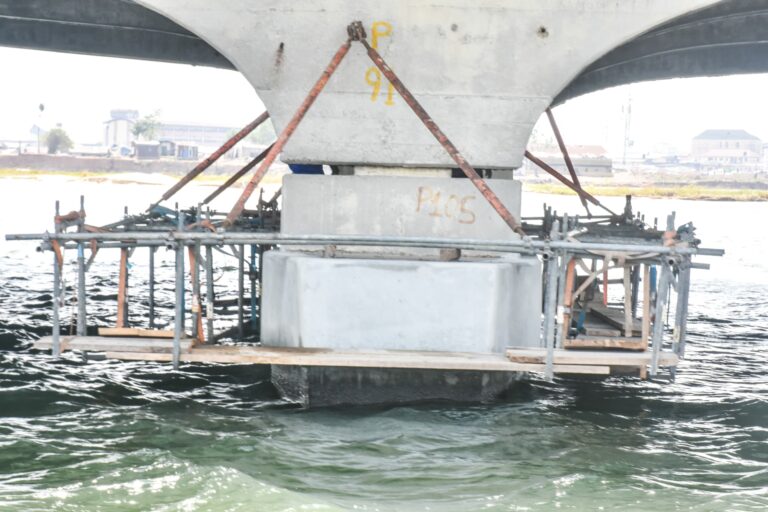
The Federal Government has unveiled plans to deploy robotic machines for inspecting underwater sections of bridges across Nigeria, in a move aimed at ensuring structural integrity and cutting down maintenance costs.
The Minister of Works, Senator Dave Umahi, made this known during a stakeholders’ meeting on Section 2 of the Lagos-Calabar Coastal Highway project. He explained that the current practice of hiring divers for underwater inspections was unsustainable due to high costs, prompting the shift to robotic technology. The government plans to collaborate with HITECH Construction Company to source the necessary machines.
Umahi declared a nationwide “bridge emergency” citing the advanced age of critical infrastructure. He noted that many of Nigeria’s bridges have remained in use for over 50 years without proper reevaluation, making it necessary to urgently assess their current structural state.
He added that President Bola Tinubu is set to begin commissioning completed infrastructure projects from May 1, 2025, with more developments expected before the year ends. The minister emphasized that the renewed hope administration is not only focused on new projects but is also committed to completing inherited ones.
In a related development, Umahi revealed that the Federal Executive Council has issued a directive banning dredging within a 10-kilometre radius of any bridge in the country. This follows alarming discoveries of dangerous dredging activities around the Third Mainland Bridge in Lagos.
The Minister warned that continued dredging in these areas could lead to bridge collapse, as many bridge piles in Lagos are supported by skin friction in sand-based systems, which become unstable when the surrounding sand is removed.
To ensure better protection of national infrastructure, Umahi called for strengthened collaboration with the Nigerian Navy. He noted that the Navy’s presence on waterways is essential to curbing illegal dredging and sand-filling activities that endanger bridges. According to him, proactive measures such as the use of robotic inspections and military enforcement will help safeguard Nigeria’s aging bridges and enhance public safety.