

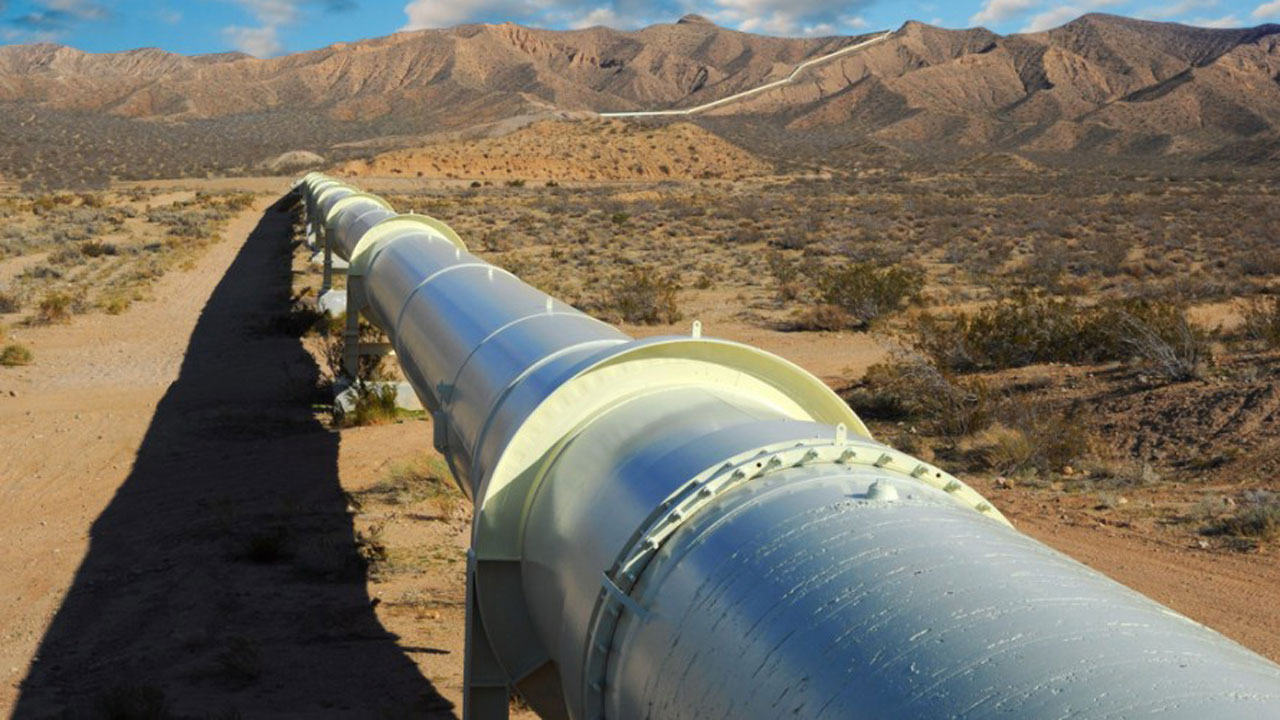
Nigeria has signed agreements with Algeria and the Republic of Niger to advance the Trans-Saharan Gas Pipeline (TSGP), a project aimed at boosting gas supplies to European markets. Officials from the three countries finalized the deal on Tuesday, February 11, 2025, in Algiers, Algeria. According to President Bola Tinubu’s Special Assistant on Social Media, Dada Olusegun, the agreements involve energy companies from all three nations and cover a feasibility study update, a compensation agreement, and a non-disclosure agreement (NDA).
The TSGP is designed to transport natural gas from Nigeria through Niger to Algeria, where it will be exported to Europe. The project will span 2,565 miles, with Algeria’s section alone covering over half the total length. Initially proposed in the 1970s, the pipeline gained momentum in the early 2000s but stalled due to funding and logistical challenges. Efforts to revive it resumed in 2022, with energy ministers from the three countries meeting to renew commitments. The project requires an estimated $13 billion investment, covering construction, equipment, and gas gathering centers.
Nigeria holds the largest gas reserves in Africa, yet much of it remains untapped due to inadequate infrastructure and limited upstream investment. The country has long struggled to maximize its gas potential, despite being among the world’s top ten in reserves. The ongoing European gas crisis—exacerbated by tensions with Russia—has underscored the need for alternative suppliers. Experts believe Nigeria could have capitalized on this opportunity but lacked the infrastructure to meet demand.
While Nigeria does export liquefied natural gas (LNG) to Europe, its share of the market remains small. The TSGP is expected to strengthen Nigeria’s position as a major gas supplier, providing a direct pipeline to European buyers. President Tinubu has previously expressed his ambition to make Nigeria a key competitor in the global energy market, particularly against Russia. The new agreements mark a critical step in realizing this goal.
With Europe actively seeking alternatives to Russian gas, the success of the TSGP could reshape Nigeria’s role in global energy supply. The collaboration with Algeria and Niger not only enhances regional energy cooperation but also presents a strategic opportunity for Nigeria to fully harness its vast gas resources. However, securing the necessary funding and overcoming logistical hurdles remain key challenges in bringing the pipeline to completion.