

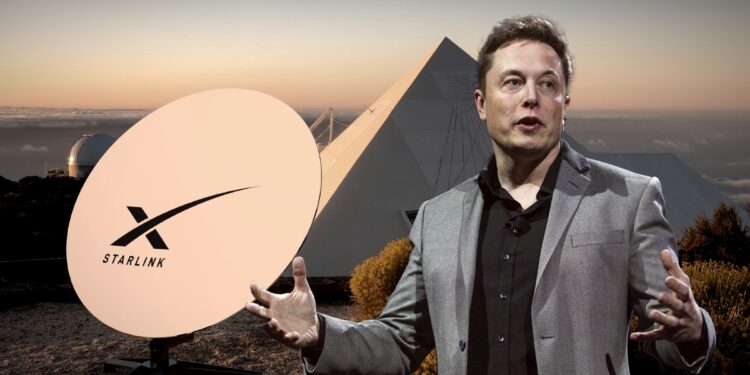
Elon Musk’s Starlink is making a significant move to enhance internet connectivity in Nigeria by setting up ground stations across the country. According to reliable sources, who requested anonymity due to lack of authorization to speak on the matter, these stations will be located in Ajah, Lagos State; Port Harcourt, Rivers State; and Sagamu, Ogun State.
Starlink is collaborating with Equinix, a global leader in data centre solutions, to develop these facilities. Equinix made its strategic entry into the Nigerian market in 2022 with the $320 million acquisition of MainOne. The total land area for the ground stations is estimated at about 29,000 acres. Construction has already begun in Okun Ajah, Lagos State, and is expected to be completed by Q4 2024, with the other locations projected to be ready in 2025.
Although specific investment details remain undisclosed, the scale of the project underscores Starlink’s commitment to solidifying its presence in Nigeria as part of its global expansion strategy.
Starlink’s ground stations, also known as gateways, are critical terrestrial relay stations that communicate with Starlink satellites orbiting the Earth. These stations play a vital role in the transmission of data between satellites and the internet backbone, acting as intermediaries by receiving data from satellites and routing it to the appropriate internet networks.
SpaceX, Starlink’s parent company, currently operates approximately 150 ground stations worldwide. These facilities are crucial in connecting the Starlink satellites with internet data centers on the ground, which in turn link to existing fiber-optic infrastructures.
By bypassing international data centers, Starlink aims to provide a more direct and efficient internet service, potentially setting a new standard for connectivity in Nigeria. This development is expected to significantly improve connectivity in the country. Traditionally, all network traffic from Nigeria is routed through international data centers before returning to the country, causing delays and potential bottlenecks. Starlink’s ground stations will streamline this process, potentially reducing latency and enhancing overall internet performance.
This advancement could greatly benefit both individual users and businesses, offering faster and more reliable internet services.
Starlink entered the Nigerian market in 2022 after acquiring an Internet Service Provider (ISP) license from the Nigerian Communications Commission (NCC). The company also secured two other major licenses, including a Sales and Installation license and an International Gateway license. The International Gateway license allows Starlink to establish and operate facilities for the transmission of international voice, data, and other telecommunication services into and out of Nigeria.
With the ground stations project, SpaceX is poised to become one of the biggest players in the Nigerian telecom sector. Already, Starlink has emerged as a major player in the internet service provisioning space, with its customer base rapidly expanding. By Q1 2024, data from the NCC revealed that Starlink had become the third-largest ISP in Nigeria, trailing only Spectranet and FibreOne.
Despite its higher costs compared to local ISPs, Starlink has sparked considerable interest among Nigerians, particularly those in areas with poor internet networks. The ubiquitous nature of its satellite service has encouraged many to switch from their existing service providers. Local ISPs, some of which have been operating in Nigeria for years, now have far fewer customers than Starlink has garnered in just one year.