

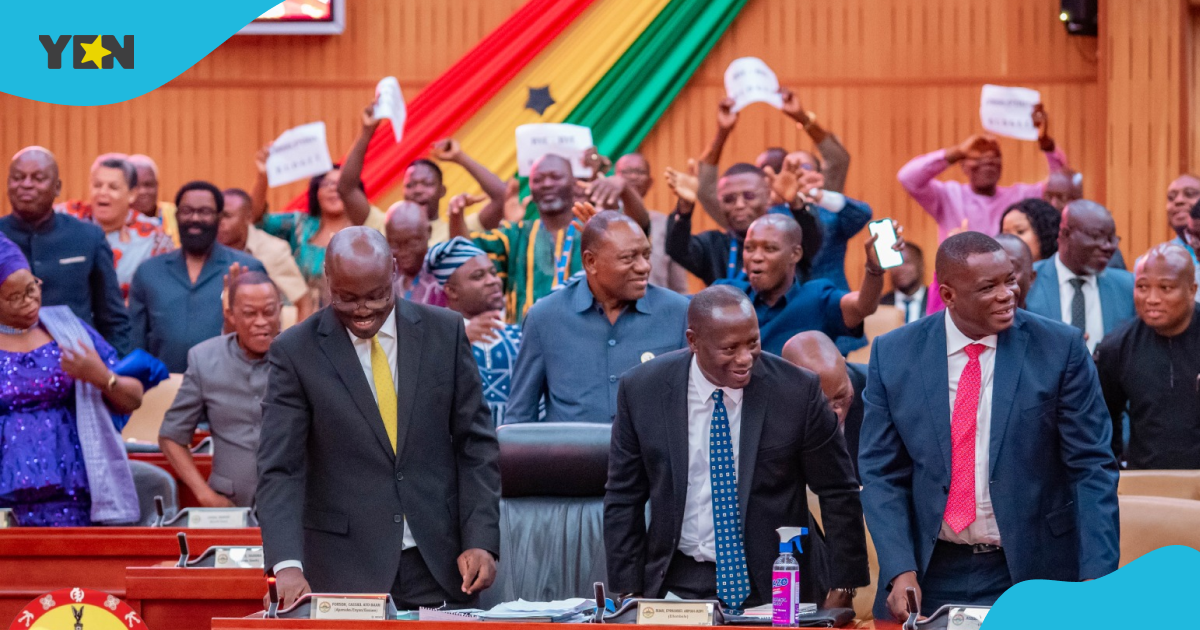
The National Democratic Congress (NDC), a prominent social democratic political party in Ghana, has expressed strong disapproval of the government’s plan to launch a 5G network in collaboration with a company linked to Indian businessman and Reliance Industries Ltd. Chairman, Mukesh Ambani. In a statement released on Monday, June 3, 2024, the NDC labeled the deal as unfavorable for the country.
The NDC’s minority caucus argued that Ghana could have secured more advanced funds through a formal bidding process rather than entering into an exclusive arrangement. They criticized the Nana Akufo-Addo-led administration for bypassing a competitive tender that could have maximized revenue.
The party emphasized that Ghana, currently grappling with significant debt, would benefit more from directing its scarce resources towards broad development projects across the nation. “The NDC caucus in Parliament holds the view that at a time when the country is in dire need of foreign exchange and non-tax revenue, it is unconscionable that the government will hand over the precious and highly sought-after 5G spectrum of the country to a shell company for a pittance,” the statement read.
According to the NDC, Ghana could have generated between $400 million and $500 million upfront if the government had pursued a formal bidding process. Instead, the deal with Next Gen Infraco (NGIC) will see Ghana receiving $125 million in annual installments over a decade. The NDC claims this undervalues the country’s sole 5G license.
Under the terms of the agreement, NGIC and its strategic partners will hold exclusive rights to Ghana’s only 5G license for ten years. Radisys Corp., a subsidiary of Reliance Industries Ltd. managed by Ambani, will provide the necessary network infrastructure, smartphones, and applications for NGIC.
NGIC’s other partners include Nokia Oyj, Tech Mahindra Ltd., and Microsoft Corp. Additionally, two African telecom companies, Ascend Digital Solutions Ltd. and K-NET, own a combined 55% of NGIC, while the Ghanaian government holds approximately 10%.
Efforts to obtain a comment from the government via the Ministry of Communications and Digitalisation spokesperson were unsuccessful. Similarly, Ascend Digital Solutions and K-NET have yet to issue statements regarding the deal.
Reports suggest that the agreement aims to replicate the success of Ambani’s Jio Infocomm Ltd. in India, which revolutionized the telecom sector by offering low-cost data and free voice calls to millions. With a population of over 33 million and three major telecom operators — MTN Ghana, Telecel Ghana, and AirtelTigo — the Ghanaian government aims to digitally connect the country within six years.
The NDC’s criticism highlights a broader debate on the best approach to leveraging emerging technologies for national development. As the government moves forward with its 5G plans, the effectiveness and financial prudence of its strategy will remain under scrutiny.