

In a move that intensifies the ongoing battle between Meta Platforms and the Australian government, Meta announced its decision to halt payments to Australian news publishers for content featured on its Facebook platform. This decision sets the stage for a renewed confrontation with Canberra, which had spearheaded a law mandating internet giants to negotiate licensing agreements with news publishers.
The contentious issue revolves around the perceived unfair advantage enjoyed by Facebook and Google in terms of advertising revenue generated from news links shared on their platforms. Meta has been gradually reducing the prominence of news and political content on its platform, citing a diminishing presence of news links in users’ feeds.
Meta’s latest action entails the discontinuation of a dedicated news tab on Facebook in both Australia and the United States, a move that mirrors a similar step taken last year in the UK, France, and Germany. Moreover, Meta declared its reluctance to forge new commercial deals for traditional news content in these regions or introduce new Facebook products tailored for news publishers.
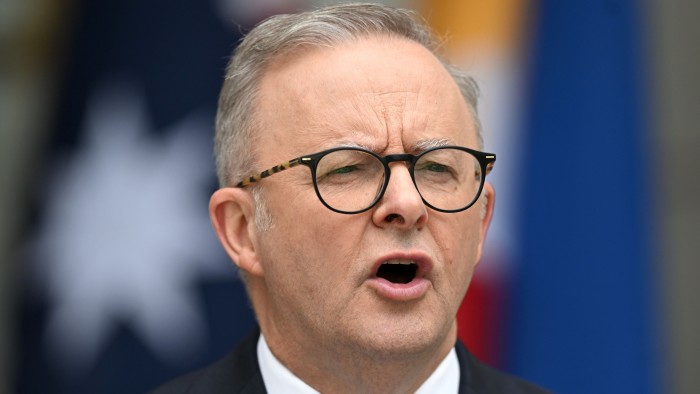
This decision has escalated tensions between Meta and the Australian government, drawing sharp criticism from Prime Minister Anthony Albanese, who characterized Meta’s actions as unfair and contrary to Australian principles. The government is now consulting with relevant authorities to determine its course of action in response to Meta’s defiance.
Former ACCC chair Rod Sims condemned Meta’s reversal as self-serving, expressing concerns about the detrimental effects on journalistic standards and societal discourse. Under Australia’s 2021 law, the government retains the authority to appoint a mediator to arbitrate fee negotiations with Meta and potentially impose fines for non-compliance.
While Meta retains the discretion to block users from reposting news articles, it is not obligated to compensate news publishers in such instances. Tensions are further exacerbated by Meta’s stance in Canada, where similar laws prompted a comparable response.
Internet studies professor Tama Leaver predicts that Meta will likely challenge any government intervention in court rather than escalate the dispute by restricting news links on its platform. Meanwhile, major Australian media outlets have lambasted Meta’s decision, labeling it as an assault on the industry and urging the government to explore all available options under the Media Bargaining Code.
Despite the absence of disclosed deal values, Australian media outlets estimate Facebook’s agreements to be worth approximately A$70 million annually. In contrast, Google’s licensing deals with Australian media extend for five years, with negotiations for renewal already underway.
With numerous governments worldwide seeking to safeguard their local news industries from digital monopolies, Meta’s clash with the Australian government signifies broader regulatory challenges in the digital era. Indonesia has also signaled its intent to enact similar measures, reflecting a global trend towards reining in tech giants’ dominance in the online advertising market.