

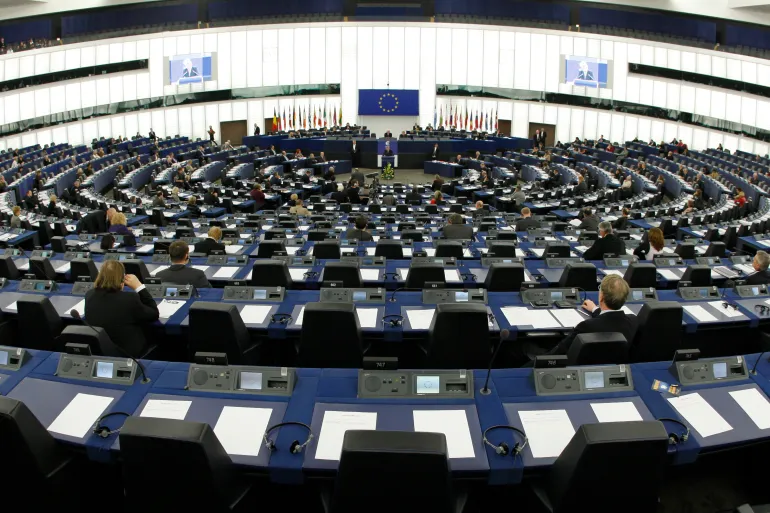
EU lawmakers and governmental representatives have engaged in extensive talks on landmark rules governing Artificial Intelligence (AI), leading to an overnight extension of discussions as pivotal issues remained unresolved after a grueling 20-hour session.
In a breakthrough amid the prolonged discussions, both sides achieved a provisional agreement regarding the regulation of rapidly advancing generative AI systems, including technologies like ChatGPT. However, crucial matters such as AI utilization in biometric surveillance and access to source code remained subjects of ongoing debate.
Despite the tense atmosphere characterizing the continued negotiations, the Council of the European Union unexpectedly postponed an initially scheduled press conference, adding to the anticipation surrounding the ongoing talks.
Thierry Breton, the EU industry chief, took to social media to emphasize the complexity of negotiations involving Parliament, the EU Commission, and the Council. Breton’s post, accompanied by an image featuring EU lawmakers Dragos Tudorache and Brando Benefei, highlighted the intricate nature of the negotiation process.
Since a proposed draft rules two years ago by the European Commission, countries and lawmakers have grappled with the challenge of aligning regulations with the rapidly evolving AI landscape, impeding consensus-building.
This legislation, once finalized, could serve as a model for other nations seeking to regulate their AI industries, offering an alternative approach to the hands-off strategy of the U.S. and China’s interim regulations.
With a looming deadline before the Parliamentary elections in June, EU stakeholders aim to finalize the regulations by spring to prevent potential delays and maintain the bloc’s pioneering position in AI regulation.
The initial framework of the law, proposed in 2021, preceded the transformative impact of technologies like Microsoft-backed OpenAI’s ChatGPT, which revolutionized the scope of AI potential.
However, tensions arose due to a proposal by France, Germany, and Italy suggesting that creators of generative AI models self-regulate, a move that could favor companies like France’s Mistral and Germany’s Aleph Alpha.
On the contentious issue of biometric surveillance, EU lawmakers aim to prohibit AI usage, while governments advocate for exceptions related to national security, defense, and military purposes.
As the discussions persist, stakeholders remain poised for further developments in shaping regulations that balance technological advancement with ethical and security considerations.