

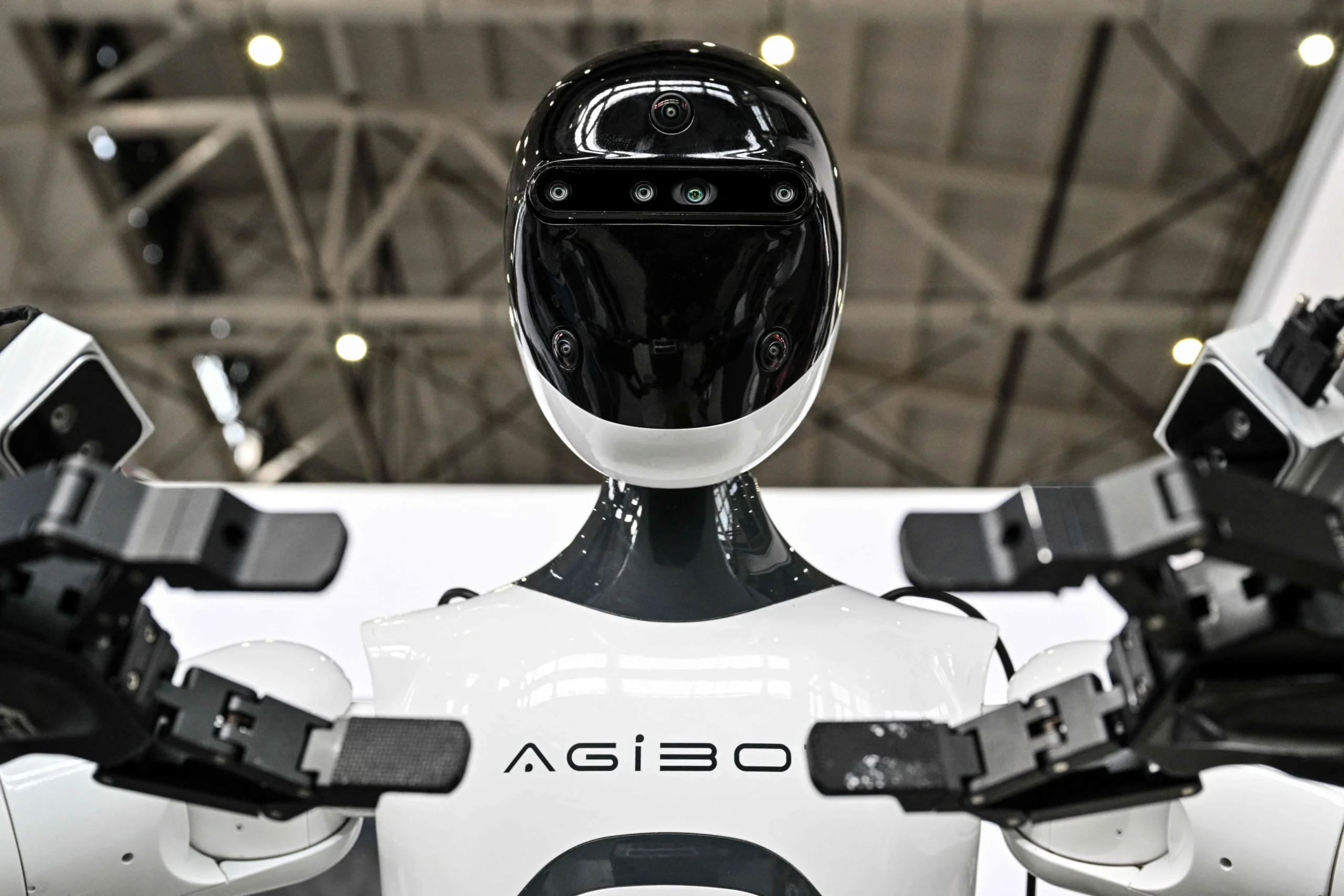
Chinese humanoid robot manufacturer, AgiBot, is preparing to launch an initial public offering (IPO) in Hong Kong next year, targeting a valuation between HK$40 billion and HK$50 billion ($5.14 billion–$6.4 billion). Backed by major investors including Tencent and HongShan Capital Group, the Shanghai-based firm’s listing plan aligns with Beijing’s broader drive to boost automation and strengthen China’s robotics industry amid rising competition with the United States. AgiBot has appointed China International Capital Corp (CICC) and CITIC Securities to lead the listing, with Morgan Stanley joining later in the process.
Founded in 2023 by former Huawei executives Deng Taihua and Peng Zhihui, AgiBot gained national attention when President Xi Jinping inspected its humanoid robots during a visit to Shanghai earlier this year. The company produces the Yuanzheng and Lingxi humanoid robot series, alongside data collection tools used for AI model training. The robots are being trained to perform various tasks such as folding clothes, making coffee, and cleaning, as part of AgiBot’s mission to integrate robotics into industries like manufacturing and logistics.
AgiBot’s expansion drive has been bolstered by strategic partnerships and fresh investments. In August, it signed a multi-million yuan agreement with automotive parts maker Fulin Precision Engineering to deploy nearly 100 Yuanzheng robots across its factories. The firm also secured additional funding from LG Electronics, Mirae Asset, BYD, and Hillhouse Investment, reflecting growing investor confidence in China’s robotics and automation potential.
If successful, AgiBot’s IPO would make it one of the few humanoid robot firms to tap the public market, following Ubtech Robotics, which listed in Hong Kong in 2023 and has since seen its stock surge by 150%. The move comes amid a resurgence in Hong Kong’s IPO market, now the world’s top exchange by combined listing volume, with over 270 firms filing this year and total funds raised reaching $24 billion, more than double 2024’s figure, according to LSEG data