

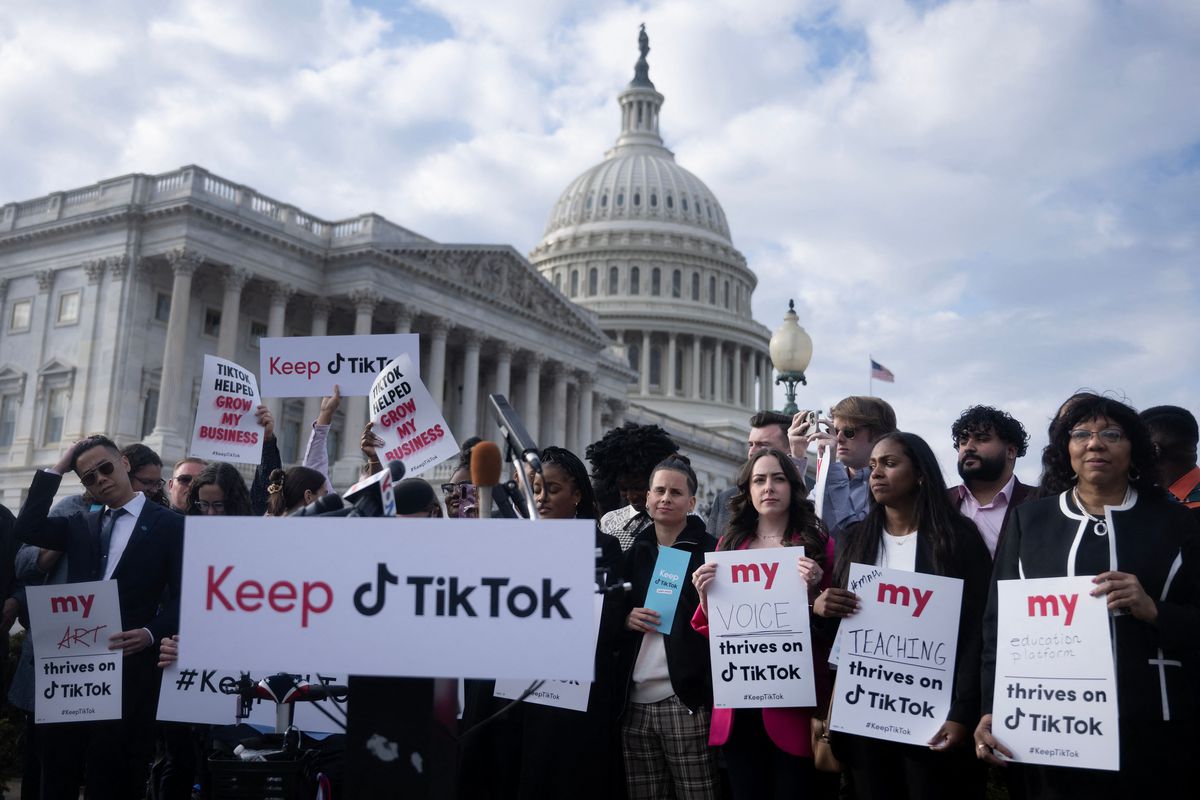
TikTok and its Chinese parent company ByteDance have taken legal action in the United States, filing a lawsuit in federal court on Tuesday to block a law signed by President Joe Biden. This law, if enforced, would mandate the divestiture of the popular short video app used by approximately 170 million Americans or potentially result in its ban.
The lawsuit was filed in the U.S. Court of Appeals for the District of Columbia Circuit, with the companies contending that the law violates several aspects of the U.S. Constitution, notably the First Amendment’s protection of free speech.
In their legal challenge, TikTok and ByteDance argue that the law imposes an unprecedented nationwide ban on a specific speech platform, an action never before seen in U.S. history. They assert that compliance with the law’s divestiture requirement is impractical and would inevitably lead to the shutdown of TikTok, effectively silencing its vast user base by January 19, 2025.
The White House’s stance on the matter reflects a desire to end Chinese ownership of TikTok due to national security concerns, but it has not explicitly supported a ban on the app. However, the White House declined to comment on the lawsuit, while the U.S. Justice Department has yet to respond to requests for comment.
This legal maneuver by TikTok is the latest in a series of efforts to fend off attempts to shut down its operations in the United States. Competitors such as Snap and Meta are seeking to capitalize on TikTok’s political uncertainty to divert advertising revenue away from the platform.
The genesis of the law stems from apprehensions among U.S. lawmakers regarding potential Chinese access to American user data or espionage through the app. The legislation swiftly passed through Congress following its introduction, reflecting bipartisan concerns.
TikTok vehemently denies any allegations of sharing U.S. user data with the Chinese government, dismissing such concerns as speculative. The law not only mandates divestiture but also restricts app stores and internet hosting services from supporting TikTok unless ByteDance complies with the divestiture requirement by the specified deadline.
In response to the law, TikTok and ByteDance have approached the D.C. Circuit seeking an injunction against U.S. Attorney General Merrick Garland from enforcing the law, arguing that such relief is warranted to prevent irreparable harm.
Ownership of ByteDance, according to the lawsuit, is dispersed among global institutional investors, the company’s Chinese founder, and its employees, including thousands of Americans. The ongoing struggle over TikTok underscores broader tensions between the United States and China in the realm of internet and technology.
TikTok claims to have invested significant resources, amounting to $2 billion, in implementing measures to safeguard the data of its U.S. users. Moreover, it has made commitments in a draft National Security Agreement developed through negotiations with the Committee on Foreign Investment in the United States (CFIUS).
The lawsuit highlights the breakdown in discussions between ByteDance and CFIUS, with the latter insisting on divestiture of the U.S. TikTok business. The involvement of CFIUS, chaired by the U.S. Treasury Department, underscores the national security dimension of the issue.
Former President Donald Trump’s unsuccessful attempt to ban TikTok and WeChat in the United States, coupled with his subsequent reversal, reflects the complexity of addressing security concerns while maintaining access to popular platforms.
The lawsuit raises questions about the feasibility of finding a suitable buyer for TikTok and the challenges associated with relocating its source code to the United States, a process that could take years according to the plaintiffs.