

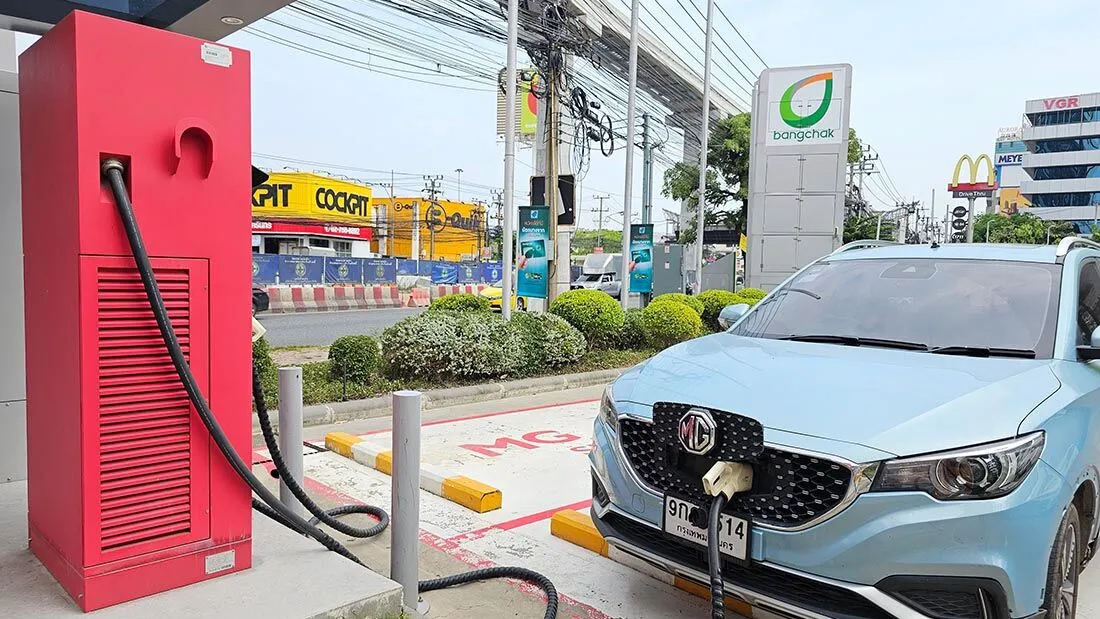
Thailand is gearing up to commence lithium production within the next two years from a mine in its southwest, as part of its ambitious bid to establish itself as a regional electric vehicle (EV) production hub.
This strategic move, involving the Reung Kiet project in Thailand’s Phang-Nga province, is expected to provide the country with a unique advantage, positioning it as both a lithium producer and a developing force in the EV manufacturing sector.
Chinese carmakers have already committed substantial investments, totaling $1.44 billion, signaling confidence in Thailand’s potential.
Pan Asia Metals (PAM.AX), the mining company behind the venture, is set to submit mining licenses in March for the Reung Kiet project, encompassing the Reung Kiet and Bang I Tum sites. Chairman and Managing Director Paul Lock expressed optimism, stating that the company aims to commence lithium chemical production from Reung Kiet by early 2026.
The Department of Primary Industries and Mines (DPIM) forecasts a lithium carbonate production of around 164,500 metric tons from the Reung Kiet site, a crucial component for EV batteries.
The mineral resources at Bang I Tum, potentially 10%-70% larger than Reung Kiet, position Thailand as a significant player in the lithium market. Paul Lock emphasized the growth potential through further exploration, aligning with Thailand’s ambitions to emerge as a regional hub for electric vehicles.
Thailand’s push into higher EV output corresponds with its plans to convert 30% of its annual vehicle production into EVs by 2030.
The Thailand Board of Investment has already supported 38 battery production projects with investments totaling 23.6 billion baht ($659.40 million). The goal is to transform Thailand into a regional hub for battery production, encompassing both EVs and energy storage.
The government’s efforts extend to encouraging lithium exploration in new areas, including regulatory revisions to allow private firms such as Matsa Resources (MAT.AX) to undertake studies on agricultural land. Matsa Resources, an Australian miner with two special prospecting licenses in Thailand, aims to contribute to establishing a comprehensive supply chain from mining to production within the country.
The lithium deposits under exploration in Thailand are unique, found within lepidolite minerals, differing from traditional sources like spodumene and brine. Discussions with Chinese firms are underway to process the lepidolite mineral, which could be more expensive than other processing methods.
The ultimate goal is to establish a mine and a 10,000-tonnes-per-annum lithium conversion plant in Thailand with an investment ranging from $180 million to $250 million, supporting the local battery manufacturing industry.