

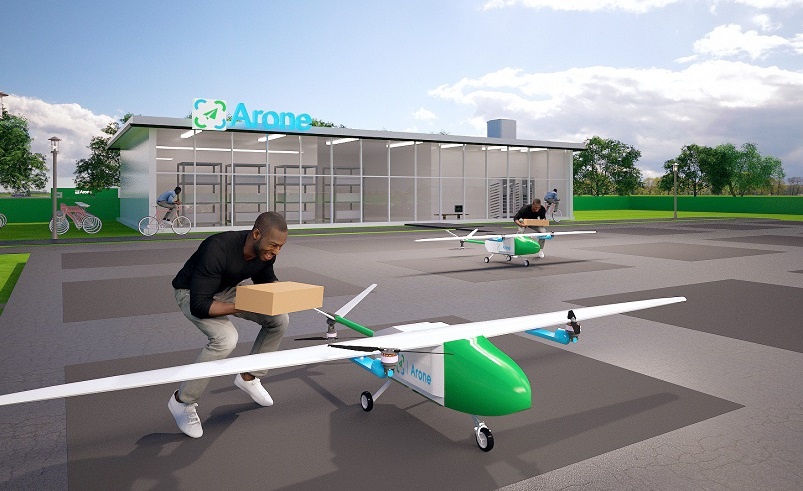
In a 2,000 square metre facility in Nsukka, Enugu State, engineers are assembling drone airframes, testing control systems and refining battery modules in a bid to prove that advanced hardware can be built locally. Arone Technologies, founded in 2018 by AI engineer Emmanuel Ezenwere, is positioning itself as one of the few Nigerian startups focused on manufacturing drones and modular solar energy systems within the country.
That ambition has received a major boost through a ₦12.95 billion partnership with the state owned Institute of Management and Technology, Enugu. Over the next four years, both partners plan to establish what they describe as Nigeria’s first dedicated tech manufacturing plant focused on defence, aerospace, robotics, artificial intelligence and renewable energy. The facility, to be sited within the IMT campus, is projected to produce 5,000 Aurora drones annually, more than 30,000 Luminar solar systems and over 200 QView AI servers.
Arone’s journey began with a modest ₦3 million grant from Roar Nigeria and a five thousand dollar angel investment, followed by a one hundred thousand dollar seed round. After an early drone crash wiped out more capital than the company had raised, the team restructured its approach, breaking its systems into modules and gradually refining its designs. Today, the company says it works with the Nigerian Defence Research and Development Bureau and the Air Force, while also deploying drones to address last mile healthcare delivery challenges across rural communities.
Beyond drones, Arone expanded into modular solar energy systems after grappling with persistent electricity shortages. Its flagship Luminar units, powered by lithium iron phosphate batteries, are designed to support households and critical infrastructure during outages. The company says it has deployed more than 1.35 megawatt hours of these systems across all 36 states, including installations supporting vaccine storage in primary healthcare centres.
Under the IMT agreement, Arone will provide intellectual property and technical expertise, while the institution supplies funding and infrastructure. The partnership also aims to train over 20,000 students, creating a pipeline for hardware engineering and industrial skills development. If successful, the initiative could reposition Enugu as a hub for indigenous aerospace and renewable energy manufacturing, while advancing efforts to shift Nigeria from a technology consuming nation to a producing one.