

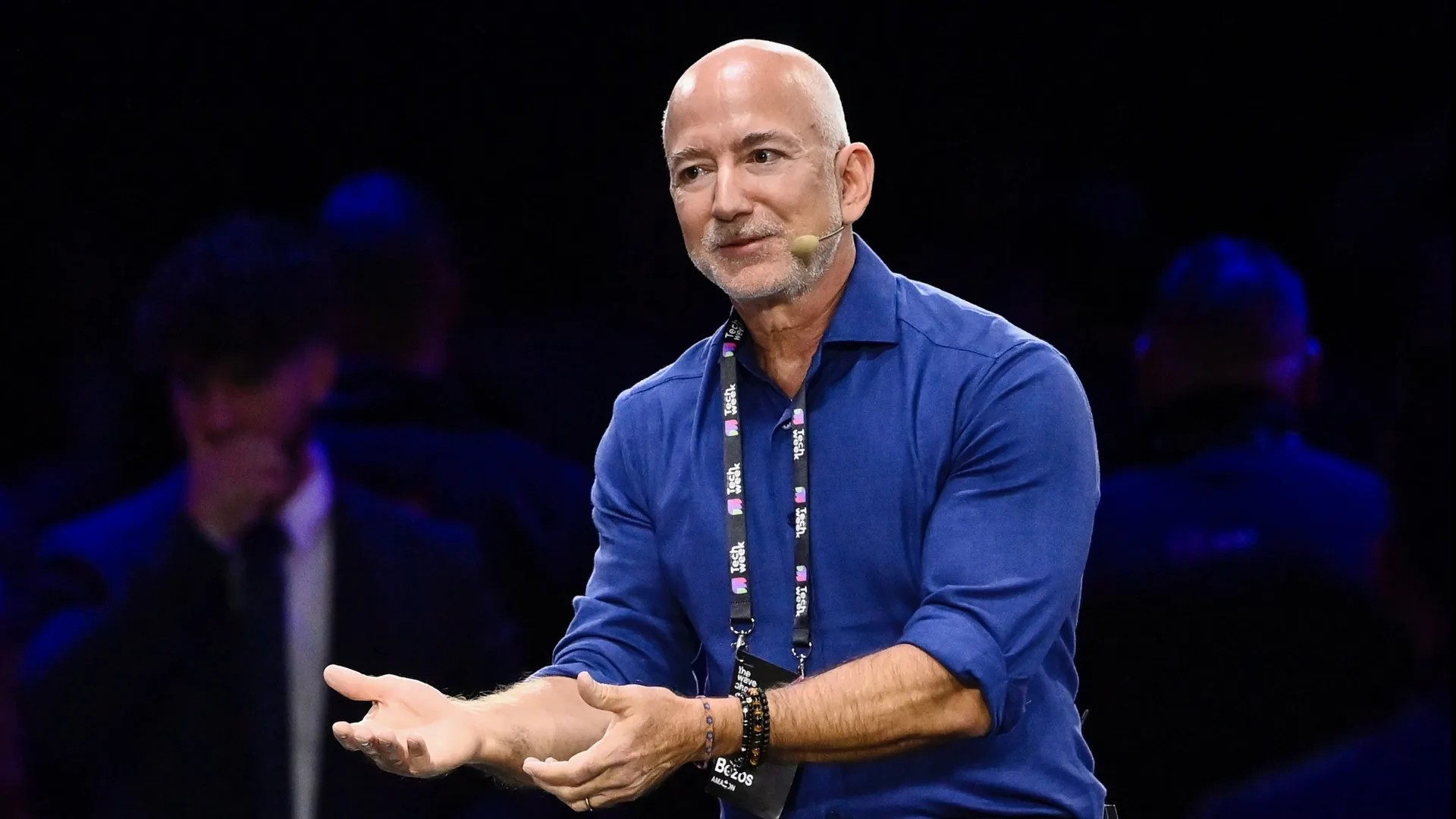
Amazon founder Jeff Bezos has forecast that gigawatt-scale data centres will be built in space within the next two decades, powered by uninterrupted solar energy that could make them more efficient than those on Earth. Speaking at the Italian Tech Week in Turin, Bezos said the move toward orbital data infrastructure is a natural progression as the world’s growing reliance on artificial intelligence (AI) drives up electricity and water demand for cooling terrestrial servers.
Bezos explained that space offers unique advantages for hosting massive data clusters, including constant solar power and the absence of weather disruptions. “There are no clouds, no rain, no weather,” he noted, adding that such conditions could make space-based centres cheaper and more reliable over time. He described the idea as part of a broader trend of using space technologies to enhance life on Earth, following the success of communication and weather satellites.
However, the Amazon executive acknowledged that space data centres come with significant challenges, including high launch costs, maintenance difficulties, and the risk of mission failures. Despite these obstacles, Bezos believes the long-term payoff will justify the investment as technology advances and launch costs decline.
Drawing parallels between the current AI boom and the internet surge of the early 2000s, Bezos urged optimism while cautioning against the inevitable speculative hype. “The societal and beneficial consequences of AI, like we had with the internet 25 years ago, are for real and here to stay,” he said. He added that while bubbles may form and burst, the transformative impact of AI will be far-reaching and deeply embedded in everyday life